PET TRAINING · 6 MIN READ
How to Train a Cat to Use a Scratching Post (and Stop the Furniture)
Cats scratch because they have to — it is wired into their biology. The right scratching post setup, plus a few training principles, redirects nearly all furniture scratching. Plus what the AAFP and AVMA say about declawing.
Advertisement
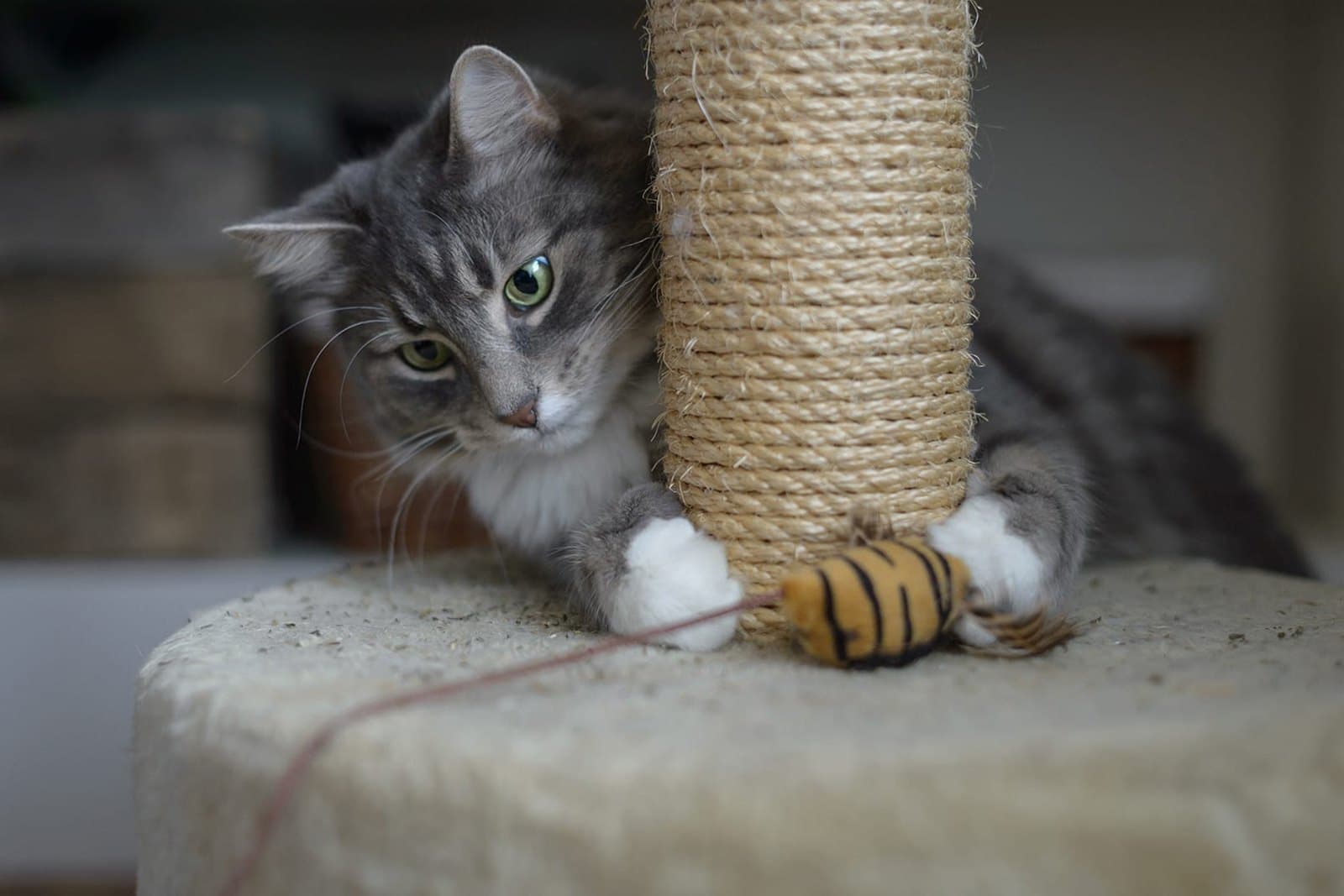
Why Cats Scratch (and Why You Cannot Stop It)
Scratching is normal, healthy, biologically essential cat behavior. According to the ASPCA, cats scratch for four distinct reasons:
- To maintain claws. Scratching removes the dead outer layer (the husk) of the claw to expose the sharper layer beneath.
- To stretch. Especially the back, shoulders, and full body.
- To mark territory. Both visually (the scratch marks themselves) and through scent glands in the paws.
- To work off energy. A satisfying scratch is genuinely pleasurable for cats.
You cannot train a cat not to scratch. You can only teach them where to scratch.
Why Cats Choose Furniture
If your cat is scratching furniture, the furniture is currently the best scratching option in your home. To redirect, you need to provide an alternative that beats the furniture on every dimension a cat values.
Cats prefer surfaces that:
- Are tall enough for a full body stretch (typically 32+ inches for adult cats).
- Are stable — wobbling kills the appeal instantly.
- Have the right texture (sisal rope, sisal fabric, cardboard, or rough wood).
- Are placed in socially important locations (where the cat already wants to scratch).
Choosing the Right Scratcher
Vertical scratching posts
The most universally appealing format. Look for:
- Solid wood base, at least 12x12 inches.
- Sisal-rope or sisal-fabric covering (not carpet, which trains cats to scratch carpet).
- Tall enough that an adult cat can stretch fully overhead — minimum 32 inches.
- Heavy enough not to wobble. Toppling once can kill the appeal forever.
Horizontal scratchers
Cardboard scratching ramps and pads are loved by some cats and ignored by others. Place flat on the floor or angled.
Cat trees
Multi-level cat furniture combines scratching with vertical space and napping platforms. Worthwhile for indoor cats.
Doorframe scratchers
Strap-mounted vertical scratchers attached to door frames. Good for renters who cannot use floor stands.
Where to Place Scratchers
Scratcher placement matters as much as the scratcher itself. Cats often scratch:
- After waking up. Place a scratcher near the cat's preferred sleeping spot.
- Near territorial markers. Doorways, the corner of the couch, the entrance to a favorite room.
- In socially important areas. Living rooms where the family gathers, not in the basement or laundry room.
If your cat is scratching the corner of the couch, put the scratching post right next to the couch corner. As they shift to the post, you can move it slowly (a few inches per week) to a more permanent location.
The Training Protocol
- Place the scratcher in a high-value spot the cat already uses.
- Make the scratcher attractive. Rub catnip on it. Drape a wand toy over it. Praise calmly when the cat investigates.
- Reward every use. The instant the cat scratches the post, mark with a calm yes and offer a small treat.
- Make the furniture less attractive. Double-sided sticky tape (Sticky Paws is one brand), aluminum foil, or a citrus-scented spray on furniture corners cats are using. Most cats dislike sticky paws and citrus.
- Never punish. Yelling or spraying water increases stress and damages the relationship without reducing scratching.
Why Punishment Backfires
Cats associate punishment with the human delivering it, not the behavior. A cat punished for scratching the couch typically learns to scratch the couch when the human is not present, not to stop scratching. The behavior continues; the trust erodes.
Pheromone Helpers
Synthetic facial pheromones (Feliway and similar) deposited near the desired scratcher can reduce stress-related scratching. Apply Feliway Classic or Feliscratch (a different formula) to the scratching post itself to encourage use. Effects are modest but positive in most cats.
Nail Care
Regular nail trims (every 2-4 weeks) reduce damage when cats do scratch furniture. Most cats tolerate trims if introduced gradually with positive reinforcement. Cap-style nail covers (Soft Paws) are temporary plastic caps glued over claws — they last 4-6 weeks and prevent scratching damage entirely. Some cats hate them, others tolerate them well.
Why Declawing Is Not the Answer
Declawing — known as onychectomy — is the surgical amputation of the third bone of each toe, not just the claw. The American Association of Feline Practitioners (AAFP) strongly opposes elective declawing. The American Veterinary Medical Association and AAHA also discourage it.
Documented consequences include:
- Acute and chronic pain.
- Increased risk of biting and litter box avoidance.
- Long-term gait and posture changes that can lead to arthritis.
- Permanent inability to express normal scratching behavior.
Declawing has been banned or restricted in most of Europe and a growing number of U.S. cities (New York City, Denver, Madison, Pittsburgh, and the entire state of New York). The procedure is increasingly considered an animal welfare issue rather than a routine surgical option.
Common Mistakes
- Buying a scratcher that is too short. A scratcher under 30 inches will be ignored by most adult cats.
- Using a wobbling scratcher. Stability is non-negotiable.
- Placing the scratcher in a hidden corner. Move it where the cat already wants to scratch.
- Carpet-covered scratchers. Teaches cats that carpet is for scratching.
- Punishing scratching of furniture. Damages trust without solving the problem.
Multi-Cat Households
In homes with multiple cats, the n+1 rule applies to scratchers as well as litter boxes. Three cats need at least four scratching surfaces, ideally in different rooms and at different heights. Cats use scratching to mark territory, and one cat monopolizing the only scratcher can drive another cat to the furniture.
Watch for territorial dynamics: if one cat consistently scratches over another cat's marks, add a scratcher in a separate area for the second cat. Vertical posts in different rooms work better than multiple posts in the same corner.
Why Trimming Furniture Damage Is Worth the Effort
Even with the best scratcher setup, the occasional couch swipe happens. A few damage-control habits:
- Slipcovers on commonly scratched furniture corners are easier to clean and replace than the furniture itself.
- Microfiber and tightly woven fabrics are less satisfying to scratch than nubby textures (chenille, woven rugs, sisal-style upholstery).
- Furniture protectors (clear plastic guards) installed on corners during the training period prevent the habit from forming.
If You Are Adopting a New Cat
Set up multiple scratching surfaces before the cat arrives. Vertical post in the living room, cardboard scratcher near the cat tree, doorframe scratcher in the bedroom. Cats establish scratching habits in the first weeks of moving in; available, attractive scratchers from day one prevents the furniture habit before it forms.
If Your Cat Stops Using Their Scratcher
Sometimes a cat who has happily used a scratcher for years suddenly stops. A few things to check:
- Sisal wear. A heavily worn scratcher loses appeal. Re-wrap or replace the post.
- New furniture nearby may have become a more attractive scratching surface.
- Stress or environmental changes (move, new pet, schedule change) often trigger increased or redirected scratching.
- Medical issues like arthritis can make a vertical post painful to use; offer a horizontal scratcher as an alternative.
The Bottom Line
Cats are going to scratch. The question is where. With the right scratchers in the right places, plus a small amount of redirection in the early weeks, virtually every cat can be trained to use scratching posts and ignore furniture. The work is one weekend of setup plus daily reinforcement during the first month — and the alternative (declawing) is a surgical amputation now opposed by every major U.S. veterinary organization.
For severe behavioral issues, consult a certified dog trainer or veterinary behaviorist.
RELATED READING
More from Pet Training

Pet Behavior
Separation Anxiety in Dogs: A Complete Guide
Up to 17% of U.S. dogs suffer from separation anxiety — a clinical panic disorder that produces real distress, real damage, and real suffering. Here is how to tell true separation anxiety from boredom, the evidence-based treatment plan, and when medication makes sense.
2026-05-08

Pet Behavior
Understanding Dog Body Language
Most dog bites in the U.S. could have been prevented if the human noticed earlier signals. Learn to read the full conversation — tail, ears, eyes, mouth, posture — including the famous Ladder of Aggression and the calming signals dogs use to defuse stress.
2026-05-07

Pet Behavior
Cat Body Language: A Complete Tail, Ear, and Eye Guide
Cats communicate as much as dogs do, but their signals are subtler and easier to miss. Here is the complete guide to reading your cat's tail, ears, eyes, whiskers, and posture — and what each combination tells you about how they actually feel.
2026-05-05