PET TRAINING · 6 MIN READ
Loose Leash Walking: How to Stop the Pulling
Pulling on the leash is the most common dog training complaint in U.S. households — and one of the most fixable. The modern positive-reinforcement approach, plus the right equipment, can transform a walk in a few weeks.
Advertisement
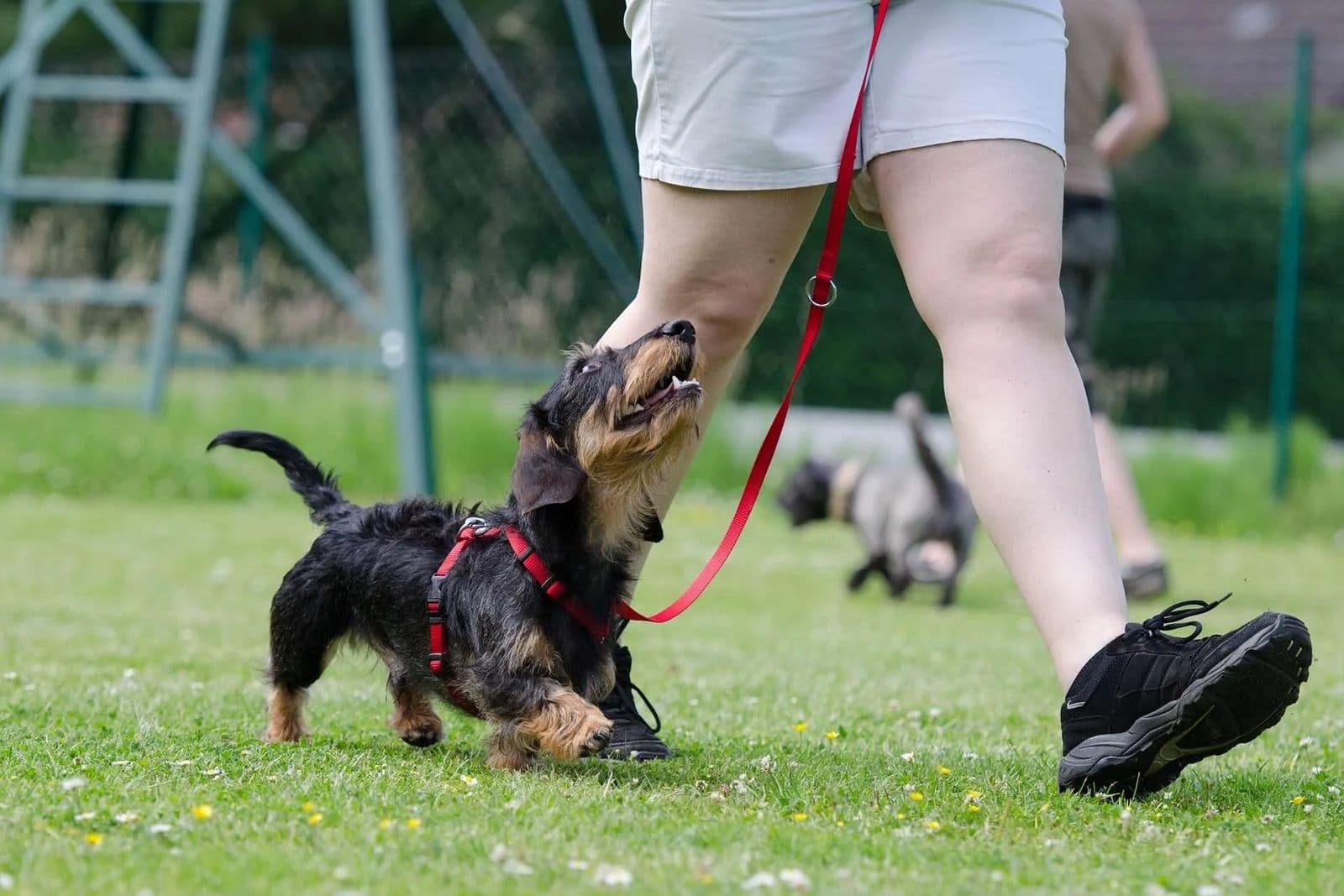
Why Dogs Pull
Dogs pull because pulling works. The default human response to a tight leash is to keep walking forward, which means the dog learns: tension on the leash makes me get to where I want to go faster. Pulling is reinforced every time, every walk, until it becomes the dog's default mode of moving with you.
Add to that:
- Dogs naturally walk faster than humans.
- The world is full of fascinating smells that demand investigation.
- Most pet dogs do not get enough exercise, so the walk is overstimulating.
The good news: most pulling can be reversed using a positive-reinforcement approach. The bad news: it requires retraining yourself, not just your dog.
Equipment Matters
What works
- Front-clip harness (Easy Walk, Freedom, Balance). The leash attaches at the chest. When the dog forges ahead, the harness gently turns them back toward you. This is the single most effective management tool while you train.
- Standard 4-6 foot leash. Provides enough length for relaxed walking without too much slack.
- Treat pouch. Hands-free, holds high-value treats accessible.
What does not work or causes harm
- Retractable leashes. They actively teach pulling — the dog learns that constant tension extends the leash, so they pull. They also break, jam, and cause rope burns.
- Prong, choke, and shock collars. May suppress pulling temporarily but cause neck injury risk and create negative associations with walks. Modern veterinary behaviorists and AVSAB recommend against them.
- Back-clip harnesses for pullers. The clip on the back actually triggers an opposition reflex and can make pulling worse for some dogs.
The Foundation: Reward Every Loose Leash
Before working on any specific technique, change your reward economy. Every time you walk your dog:
- Carry high-value treats.
- The moment your dog walks with a loose leash near you, mark with yes! and treat.
- The moment your dog looks back at you on the walk, mark and treat.
- The moment your dog passes a distraction without pulling, mark and treat.
This sounds excessive at first. Within a few walks, the dog starts noticing that staying near you and checking in pays off. That noticing is the foundation of every other technique.
The Stop-and-Go Method
The most widely recommended loose leash technique:
- Walk normally.
- The instant the leash goes tight, stop walking. Do not yank, do not say anything. Just stop.
- Wait. The dog will eventually look back, take a step toward you, or otherwise create slack in the leash.
- The moment slack appears, mark yes! and walk forward.
- Repeat. Every time.
Your dog learns: tight leash = no movement, loose leash = forward motion. The first walks are slow — you may not get to the end of the driveway in 20 minutes. Within a week or two of consistent application, dogs almost always start to keep slack in the line voluntarily.
The Be-a-Tree Variation
For dogs who get nothing from stopping (some refuse to look back), add a turn:
- When the leash goes tight, stop and turn 180 degrees.
- Walk briskly the other direction.
- When the dog catches up and the leash is loose, mark and reward.
This makes pulling actively counterproductive — pulling causes the destination to move farther away.
The Magnet Method
For dogs who are food-motivated:
- Hold a treat at your hip on the side closest to the dog.
- Take a step. If the dog stays at your side, deliver the treat.
- Take another step. Deliver another treat.
- Gradually increase the steps between treats: 1 step → 3 steps → 5 → 10.
This builds the muscle memory of walking at your side. Combine with the stop-and-go for new environments.
Set Up for Success
- Exercise before training. A dog with pent-up energy cannot focus. Play in the yard or do mental enrichment first.
- Train in low-distraction environments first. Practice in your house, then your yard, then a quiet street, then a busier sidewalk. Skip the dog park stage.
- Short, frequent sessions. Five productive minutes beats forty minutes of frustration.
- Use sniff walks separately. Many trainers recommend distinguishing between training walks (calm, structured, leash-loose) and sniff walks (the dog leads, you go where they want, no rules). The dog needs both kinds.
Two Walks, Two Purposes
Many trainers now distinguish between two kinds of dog walks, and conflating them is a common cause of frustration.
- Training walk: structured, calm, focused on loose-leash skills. Short (10-20 minutes). Done in low-distraction areas.
- Sniff walk (sometimes called a decompression walk): the dog leads, you follow. The line stays loose because you go where they want. Long (30-60 minutes). Done in safe but interesting environments.
Most pet dogs need both. Asking for perfect heel during the only daily outing means denying them the sensory stimulation that makes a walk fulfilling. A long line in a quiet park is the perfect tool for sniff walks while you train loose-leash skills separately.
Adolescent Regression
Around 6-18 months of age, even well-trained dogs often go through a period where previously reliable behaviors fall apart. Hormones shift, confidence rises, and the dog tests boundaries they accepted as a puppy. Loose leash walking is one of the most common skills to backslide.
The fix is not new methods — it is patience and consistency. Return to higher-value treats, shorter sessions, easier environments. Most dogs come back to baseline within 2-4 months. Stay consistent; the regression is developmental, not personal.
Common Mistakes
- Yanking the leash. Triggers the opposition reflex and makes pulling worse.
- Letting the dog pull just this once. Inconsistency is what makes the behavior so durable.
- Walking with too long a leash. A 6-foot leash held with no slack management means tension is the default.
- Skipping reinforcement once you see improvement. Reduce frequency only after weeks of consistency, not days.
- Comparing to pre-existing pullers. A 3-year-old dog who has pulled for 3 years takes longer than a puppy. Be patient.
Timeline Expectations
| Stage | Time |
|---|---|
| Indoor / yard practice | 1-2 weeks |
| Quiet neighborhood walks | 2-6 weeks |
| Busier sidewalks, mild distractions | 1-3 months |
| Reliably loose leash in most environments | 3-6 months |
Adolescent dogs (6-18 months) often regress through this period as hormones and confidence shift. Stay consistent; the regression is temporary.
If Nothing Works After 4-6 Weeks
Some dogs — particularly large, high-arousal, or rescue dogs with reactive backgrounds — need help beyond what a guide can provide. If you have applied consistent stop-and-go for 4-6 weeks with a front-clip harness and high-value rewards and your dog still pulls relentlessly, consider:
- A private session with a positive-reinforcement trainer to evaluate what is actually happening on the leash.
- Veterinary check for pain or discomfort that may be driving urgent forward motion.
- A reactivity assessment if pulling is paired with lunging or barking at specific triggers.
Some dogs also benefit from supplements or anxiolytic medications when leash arousal is rooted in chronic over-arousal — a conversation for your vet, not a forum.
The Bottom Line
Loose leash walking is not a single trick — it is a habit you and your dog build together over weeks of consistent reinforcement. Use a front-clip harness while you train, reward every moment of slack, stop walking the instant the leash tightens, and resist the temptation to use punitive equipment. A walk where both you and your dog can relax is one of the most rewarding routines in pet ownership; the work to get there is meaningful but always doable.
For severe behavioral issues, consult a certified dog trainer or veterinary behaviorist.
RELATED READING
More from Pet Training
Pet Behavior
Separation Anxiety in Dogs: A Complete Guide
Up to 17% of U.S. dogs suffer from separation anxiety — a clinical panic disorder that produces real distress, real damage, and real suffering. Here is how to tell true separation anxiety from boredom, the evidence-based treatment plan, and when medication makes sense.
2026-05-08
Pet Behavior
Understanding Dog Body Language
Most dog bites in the U.S. could have been prevented if the human noticed earlier signals. Learn to read the full conversation — tail, ears, eyes, mouth, posture — including the famous Ladder of Aggression and the calming signals dogs use to defuse stress.
2026-05-07

Pet Behavior
Cat Body Language: A Complete Tail, Ear, and Eye Guide
Cats communicate as much as dogs do, but their signals are subtler and easier to miss. Here is the complete guide to reading your cat's tail, ears, eyes, whiskers, and posture — and what each combination tells you about how they actually feel.
2026-05-05