PET FEEDING · 6 MIN READ
Raw, Fresh, and Homemade Pet Diets: What the Evidence Says
Alternative pet diets — raw, fresh-cooked, and homemade — have grown rapidly in popularity. The evidence on each is more nuanced than either side admits. Here is what the FDA, CDC, and recent research actually say.
Advertisement
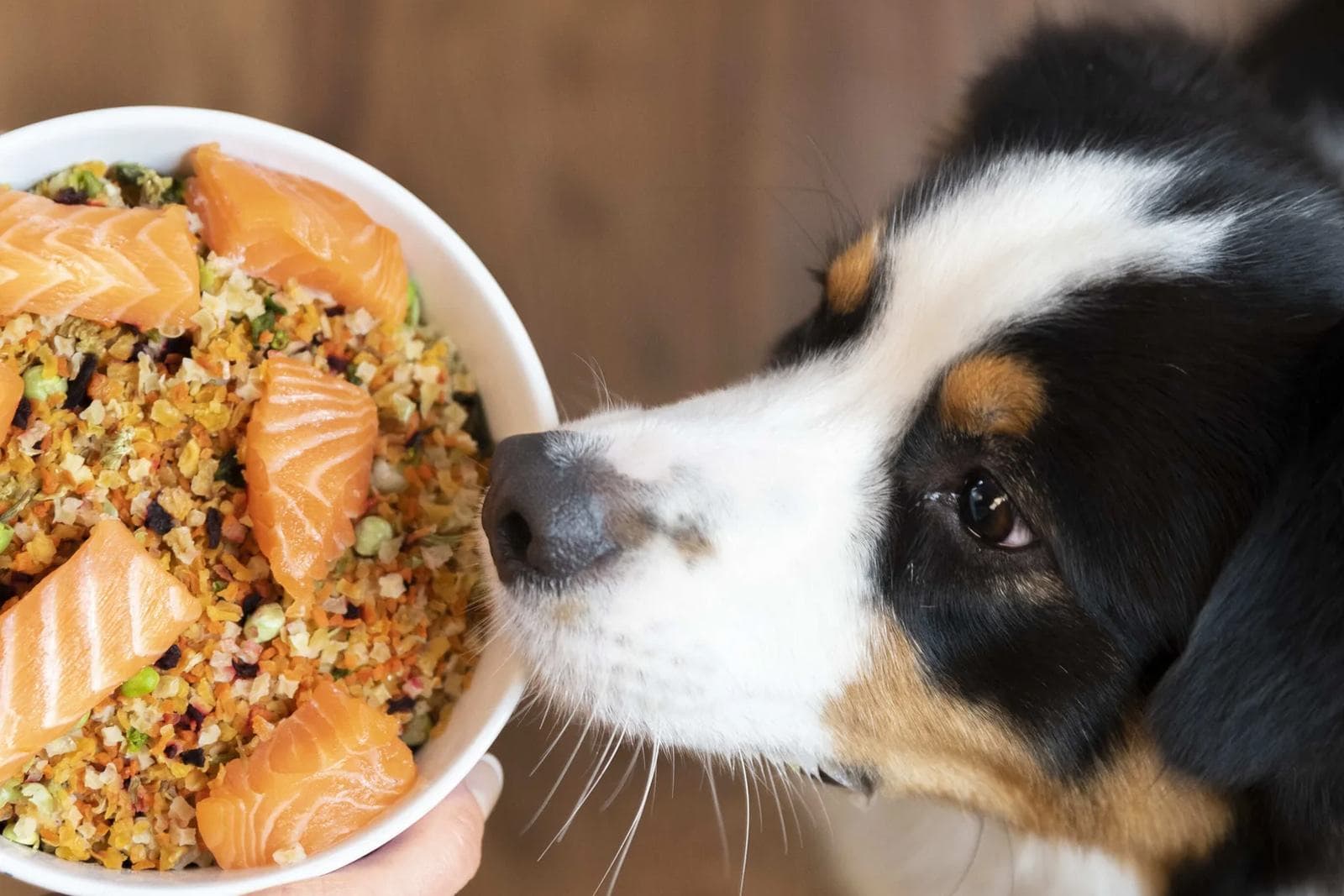
Overview of the Categories
| Diet | Description | Typical examples |
|---|---|---|
| Conventional commercial | Kibble or canned, mass-produced, AAFCO-substantiated | Most U.S. pet food |
| Fresh/refrigerated commercial | Cooked, refrigerated/frozen, AAFCO-substantiated | Subscription fresh food brands |
| Commercial raw | Raw meat-based, frozen or freeze-dried, AAFCO-substantiated | Various raw brands |
| Homemade cooked | Owner-prepared, cooked recipes | Owner-formulated home recipes |
| Homemade raw (BARF) | Owner-prepared raw meat, bones, vegetables | Various recipe philosophies |
Raw Pet Food: The FDA and CDC Position
The FDA and CDC do not recommend raw pet food. The position is based on documented pathogen risks, not on nutritional concerns alone.
The pathogen issue
The FDA applies a zero-tolerance standard for Salmonella, Listeria monocytogenes, and E. coli O157:H7 in any pet food, regardless of format. Raw pet food has the highest documented contamination rates. Recent advisories include:
- Multiple Viva Raw recalls (2025) for Salmonella and Listeria.
- Performance Dog Frozen Raw advisories.
- Answers Pet Food and Darwin's Pet Products warnings.
The risk is not just to the pet. Pets eating contaminated raw food shed bacteria in their feces and saliva, contaminating the household environment. Cases of Salmonella infection in humans linked to raw pet food have been documented, with children, elderly, immunocompromised individuals, and pregnant women at highest risk.
Listeria is particularly concerning because it survives — and can grow — in refrigerator temperatures. Standard food storage does not eliminate it.
The nutritional issue
AAFCO-substantiated commercial raw products meet basic nutrient requirements; homemade raw recipes typically do not. The combination of pathogen risk and nutritional uncertainty is why every major U.S. veterinary organization (AVMA, AAHA, ACVN) advises against raw feeding for the general pet population.
The honest counterpoint: many pets have eaten raw diets for years without incident. The risk is statistical, not certain — but the evidence base does not support it as a default recommendation.
Fresh Refrigerated Commercial Diets
The fresh-cooked subscription category (cooked, gently processed, refrigerated, AAFCO-substantiated) has grown rapidly since 2015. The category sits between conventional kibble and homemade.
What the evidence supports
- Fresh diets that meet AAFCO standards provide complete and balanced nutrition.
- Higher palatability, especially for picky eaters.
- Owner satisfaction tends to be high.
- Some peer-reviewed research suggests benefits for digestibility and stool quality.
What the evidence does not yet show
- Long-term health outcomes (decade-scale lifespan studies are missing).
- Superiority over high-quality conventional commercial food on most clinical endpoints.
Cost
Fresh commercial diets typically cost 3-6x more than conventional kibble. For a 50 lb dog, this can mean $200-$500/month. The premium is significant; many owners feed fresh as a topper rather than a complete replacement.
Homemade Diets: The Hardest to Get Right
Homemade pet food appeals to owners who want complete control over ingredients. The evidence on outcomes is sobering.
Texas A&M 2025 study
A 2025 Texas A&M analysis of 1,726 owner-reported homemade diets found that only 6% were potentially nutritionally complete. About 25% had 1-10 nutrient imbalances; 52% had 10 or more. The remaining were partial or unclassifiable.
Earlier UC Davis research analyzing 200 homemade recipes found that 95% lacked at least one essential nutrient and 83% had multiple deficiencies. The pattern is consistent across studies: most owner-formulated recipes are nutritionally inadequate, often dangerously so.
Common gaps include calcium, vitamin D, vitamin E, copper, zinc, iodine, and specific amino acids. These deficiencies usually do not cause immediate visible symptoms but produce serious cumulative effects over months to years — bone disease, anemia, cardiac problems, immune dysfunction.
Doing it right
Homemade is not impossible to do well — but it requires professional formulation and ongoing oversight:
- Work with a board-certified veterinary nutritionist (DACVN). A custom-formulated recipe specific to your pet typically costs $200-$500 to develop.
- Use a validated formulation tool. BalanceIT.com is the most commonly cited; it complies with AAFCO standards.
- Stick to the recipe exactly. Substitutions break the nutrient balance.
- Use the prescribed supplements. Almost all balanced homemade recipes require specific vitamin and mineral premixes.
- Recheck the recipe annually as research evolves and your pet's needs change.
Comparing the Categories
| Conventional | Fresh | Raw | Homemade | |
|---|---|---|---|---|
| AAFCO compliance | Yes | Yes | Yes | If formulated correctly |
| Pathogen risk | Low | Low | Higher | Variable |
| Cost (50 lb dog/mo) | $50-$120 | $200-$500 | $300-$700 | Variable |
| Convenience | High | Moderate | Low | Low |
| Long-term outcomes | Well-studied | Limited data | Limited data | Recipe-dependent |
Honest Recommendations by Category
If you are considering raw
Discuss with your vet, weigh the documented pathogen risk (especially if you have immunocompromised household members or young children), and if you proceed, use only commercial AAFCO-substantiated raw products from reputable manufacturers with strict pathogen testing.
If you are considering fresh commercial
The category is generally safe and palatable. The cost is the main barrier. If feeding fresh as a complete diet, choose AAFCO-substantiated brands. Using fresh as a topper over conventional kibble is a reasonable middle ground.
If you are considering homemade
Almost all owners who do this without professional guidance create a deficient diet. The evidence here is strong — only 6% of homemade diets are complete. If you are committed, hire a board-certified veterinary nutritionist or use BalanceIT.com to formulate. Then stick to the recipe exactly.
If you are considering switching from conventional
Most pets do well on a high-quality conventional commercial diet from a manufacturer that meets WSAVA criteria. The premium for fresh or raw is real money; the evidence for clinical benefit over a quality conventional diet is not strong.
Special Health Conditions and Alternative Diets
For pets with specific health issues, alternative diets sometimes look more attractive but require even more caution:
- Pancreatitis-prone dogs: high-fat raw or rich homemade diets can trigger episodes. Low-fat formulations are safer.
- Pets with cancer: nutritional needs change with treatment. Work with a veterinary oncology nutritionist; do not improvise.
- Diabetic pets: consistent carbohydrate content matters more than the diet category. Sudden raw or fresh switches can disrupt insulin dosing.
- Immunocompromised pets: raw food poses higher infection risk. Avoid raw entirely.
The Cost-Benefit Reality
The honest truth about diet category economics: a typical premium conventional kibble for a 50 lb dog runs $80-$120 per month. Fresh commercial subscriptions for the same dog typically run $250-$450 per month. Commercial raw runs $300-$700+ per month. Over a 12-year lifespan, switching from conventional to fresh adds roughly $25,000-$45,000 in food costs alone.
That is not a reason to choose conventional over fresh — it is a reality to plan for. Many owners feed fresh as a topper over conventional kibble, capturing palatability and freshness benefits at one-third the cost of full fresh feeding.
Switching Safely Between Categories
If you decide to move between diet categories, the standard 7-14 day transition protocol still applies — and the bigger the shift in ingredient profile (kibble to raw, conventional to fresh), the longer the transition should be. For category changes, plan on 14-21 days minimum and watch carefully for GI signs. Always consult your vet for any major dietary shift, especially if your pet has any known health conditions.
The Bottom Line
Each alternative diet category has tradeoffs the marketing rarely emphasizes. Raw carries documented pathogen risk; fresh costs significantly more without strong evidence of clinical benefit; homemade is rarely formulated correctly without professional help. None of this means alternative diets are wrong — it means they require more thought, more cost, or both than commercial conventional. The starting recommendation for most pets remains a high-quality conventional or fresh AAFCO-substantiated diet from a reputable manufacturer; deviations from that should be intentional, informed, and ideally guided by your vet or a board-certified veterinary nutritionist.
This article is for informational purposes and is not veterinary nutrition advice. For specific dietary recommendations for your pet, consult your veterinarian or a board-certified veterinary nutritionist (DACVN).
RELATED READING
More from Pet Feeding
Pet Feeding
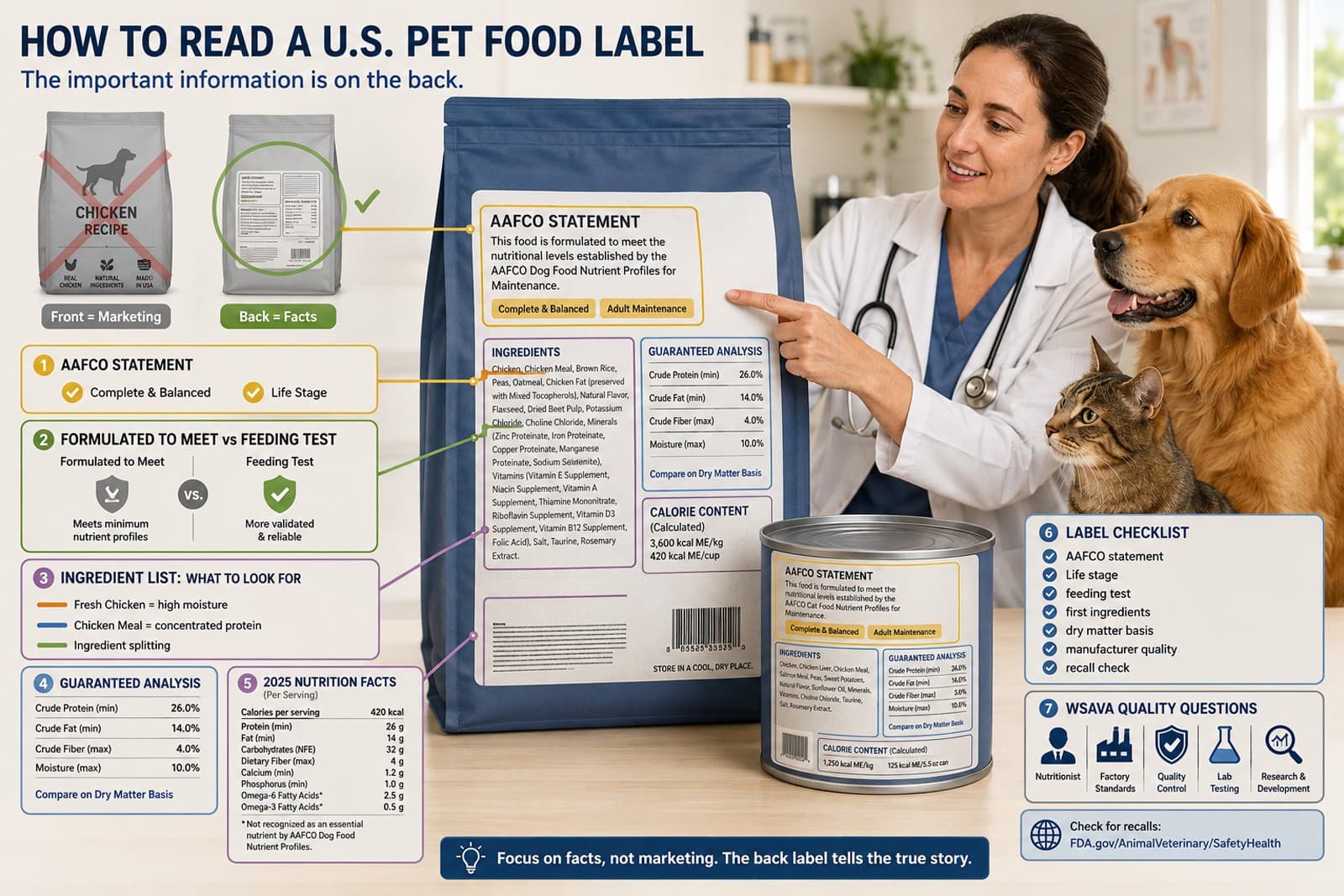
How to Read a Pet Food Label
Pet food labels are dense, regulated documents that contain almost everything you need to know about a product — if you understand the code. Here is how to decode the AAFCO statement, ingredient list, guaranteed analysis, and the new 2025 Nutrition Facts panel.
2026-05-08
Pet Feeding
The Grain-Free Pet Food and DCM Question (2026 Update)
In 2018 the FDA flagged a possible link between grain-free diets and a heart condition called dilated cardiomyopathy in dogs. Eight years later, the science is still incomplete and the recommendations are nuanced. Here is what we actually know — and when grain-free still makes sense.
2026-05-07
Pet Feeding
Wet vs Dry Pet Food: What the Science Actually Says
The wet vs dry food debate is more nuanced than most marketing suggests. Here is what the moisture content data, urinary health research, dental claims, and cost analysis actually show — and why mixed feeding often makes the most sense.
2026-05-05