PET FEEDING · 6 MIN READ
The Grain-Free Pet Food and DCM Question (2026 Update)
In 2018 the FDA flagged a possible link between grain-free diets and a heart condition called dilated cardiomyopathy in dogs. Eight years later, the science is still incomplete and the recommendations are nuanced. Here is what we actually know — and when grain-free still makes sense.
Advertisement

A Short Timeline
| Year | Event |
|---|---|
| July 2018 | FDA announces investigation into possible link between grain-free diets and DCM in dogs. |
| June 2019 | FDA publishes follow-up listing 16 most commonly named brands. |
| 2020-2022 | Continued case reports; veterinary cardiologists publish supporting case series. |
| December 2022 | FDA announces it is ending routine public updates pending further research. |
| 2023-2025 | Independent peer-reviewed research continues to find associations; consensus is that the issue has not been resolved. |
This guide explains what DCM is, what the FDA found, why the investigation paused, and what the current evidence supports.
What Is DCM
Dilated cardiomyopathy (DCM) is a heart disease in which the heart muscle weakens and the heart chambers enlarge. The weakened heart cannot pump effectively, leading to congestive heart failure and, in many cases, sudden cardiac death. DCM is the second most common heart disease in dogs.
Some breeds — Doberman Pinschers, Great Danes, Boxers, Irish Wolfhounds, and Cocker Spaniels — have a known genetic predisposition. The 2018 FDA concern was about non-hereditary DCM appearing in breeds without that predisposition, including Golden Retrievers, mixed breeds, Doodles, and many others.
The 2018 FDA Alert
On July 12, 2018, the FDA announced an investigation into reports of canine DCM linked to certain diets. By the time the FDA paused public updates in December 2022, they had received 1,382 reports of DCM in dogs, with the majority coming in between 2018 and 2020.
Two patterns emerged from the data:
- More than 90 percent of reported diets were grain-free.
- 93 percent contained peas and/or lentils as primary ingredients.
Other common factors included potatoes (especially sweet potatoes), other legumes (chickpeas, beans), and various pulses. The pattern pointed not just at grain-free as a category, but at a specific subset of grain-free diets formulated with high proportions of legumes and pulses.
The Pulse and Legume Connection (Not Just Grain-Free)
The early framing of the issue as a grain-free problem was incomplete. Many grain-free diets — those built around traditional protein sources without heavy legume inclusion — were not flagged. Many grain-inclusive diets that also relied heavily on peas and lentils were.
The veterinary cardiology community now generally refers to the pattern as BEG diets — boutique, exotic, grain-free — characterized by:
- Smaller-brand manufacturers without veterinary nutritionists on staff.
- Exotic or novel protein sources (kangaroo, alligator, bison) without long feeding-history.
- High proportions of peas, lentils, chickpeas, beans, or potatoes.
- Typically grain-free.
The mechanism is still unclear. Theories include amino acid (taurine) deficiencies, interference with nutrient absorption, anti-nutritional factors in pulses, or unknown synergistic effects. Multiple peer-reviewed studies have ruled out simple taurine deficiency as the sole cause.
The 2022 Update and Ending Public Updates
In December 2022, the FDA announced it was ending routine public updates on the investigation. Some media coverage interpreted this as the FDA exonerating grain-free diets. It did not.
The FDA's actual position: the science is incomplete; routine update reports were not adding new information; and the agency would resume public updates if significant new findings emerged. The issue is paused at the policy level, not closed at the scientific level.
Recent Research (2023-2025)
Peer-reviewed research published since 2022 has continued to find associations between BEG-style diets and DCM. Key findings:
- A 2024 review concluded that grain-free diets containing high proportions of peas and lentils continue to show associations with non-hereditary DCM.
- Multiple veterinary cardiology case series report symptom improvement when affected dogs are switched from BEG diets to traditional commercial diets — though improvement is not universal and some heart changes persist.
- The mechanism remains unidentified.
The pet food industry has pushed back on the FDA's framing, citing methodological concerns with the case-report-based investigation. The veterinary cardiology community has generally maintained the position that BEG diets are associated with risk.
Should You Switch Back to Grain-Inclusive?
The veterinary cardiology consensus, summarized in many recent veterinary continuing education programs, is roughly:
- For dogs without a medical reason to be on a grain-free diet, switching to a grain-inclusive diet from a major manufacturer with veterinary nutritionists on staff is the more conservative choice.
- For dogs with confirmed food allergies (which involve a specific protein, not grain), switching is appropriate but should be guided by a veterinarian.
- For dogs already showing clinical signs of DCM (cough, exercise intolerance, fatigue), an immediate diet change combined with cardiology evaluation is warranted.
When Grain-Free Still Makes Sense
Grain-free is not categorically harmful. There are legitimate reasons a vet might recommend it:
- Confirmed food allergy to a specific grain (uncommon but real).
- Specific medical conditions requiring a particular ingredient profile.
- Veterinary therapeutic diets formulated by major manufacturers with veterinary nutritionists.
The shift in evidence is not all grain-free is bad. It is BEG-style grain-free is associated with risk, and there is rarely a reason for a healthy dog to be on one.
Note: Cats have not shown the same DCM pattern. The grain-free DCM concern is a dog issue, not a feline one.
What the Pet Food Industry Has Said
The U.S. pet food industry has consistently disputed the FDA's framing, with several common arguments:
- The reports are voluntary case submissions, not a controlled epidemiological study.
- The 1,382 reports are a tiny fraction of the millions of dogs eating grain-free diets, suggesting the absolute risk per dog is very small.
- Genetic predisposition, age, and other unmeasured variables may explain much of the pattern.
- Some affected dogs have improved on continued grain-free diets when other factors (taurine supplementation, weight loss) were addressed.
These critiques are legitimate methodologically. But they do not negate the cardiology community's clinical observations: many veterinary cardiologists report seeing fewer non-hereditary DCM cases since the FDA alert led to widespread diet changes, suggesting the association is real even if the absolute risk per dog is modest.
How to Choose if You Are Concerned
If you currently feed a grain-free or BEG-style diet and are uncertain:
- Check the brand against WSAVA criteria. Does the manufacturer employ a board-certified veterinary nutritionist? Have they published peer-reviewed research?
- Read the first 10 ingredients. Are peas, lentils, chickpeas, or potatoes prominent in the top 5?
- Talk to your vet. A wellness exam — including listening to the heart for murmurs and arrhythmias — can detect early signs of DCM.
- Consider an NT-proBNP blood test or echocardiogram if you want a deeper look at heart function. These are not routine but are appropriate for at-risk dogs.
- Switch slowly using the standard 7-14 day food transition protocol if changing diets.
Practical Recommendations
- If you do not have a specific reason to feed grain-free, choose a grain-inclusive diet from a manufacturer that meets the WSAVA criteria.
- If you do feed grain-free, lean toward formulations from major manufacturers without heavy pulse/legume content.
- Watch for early signs of DCM: cough, exercise intolerance, episodes of weakness, rapid breathing.
- Discuss any diet change with your vet, especially for breeds in known higher-risk categories.
The Bottom Line
The grain-free DCM story is not closed. The FDA paused public updates because the investigation had stalled, not because the concern was resolved. The current best evidence supports a cautious approach: most healthy dogs do not need a grain-free diet, BEG-style formulations are associated with elevated risk, and the safer default for any healthy dog is a grain-inclusive food from a manufacturer that meets WSAVA criteria. Where grain-free is medically indicated, work with your vet to choose carefully.
This article is for informational purposes and is not veterinary nutrition advice. For specific dietary recommendations for your pet, consult your veterinarian or a board-certified veterinary nutritionist (DACVN).
RELATED READING
More from Pet Feeding
Pet Feeding
How to Read a Pet Food Label
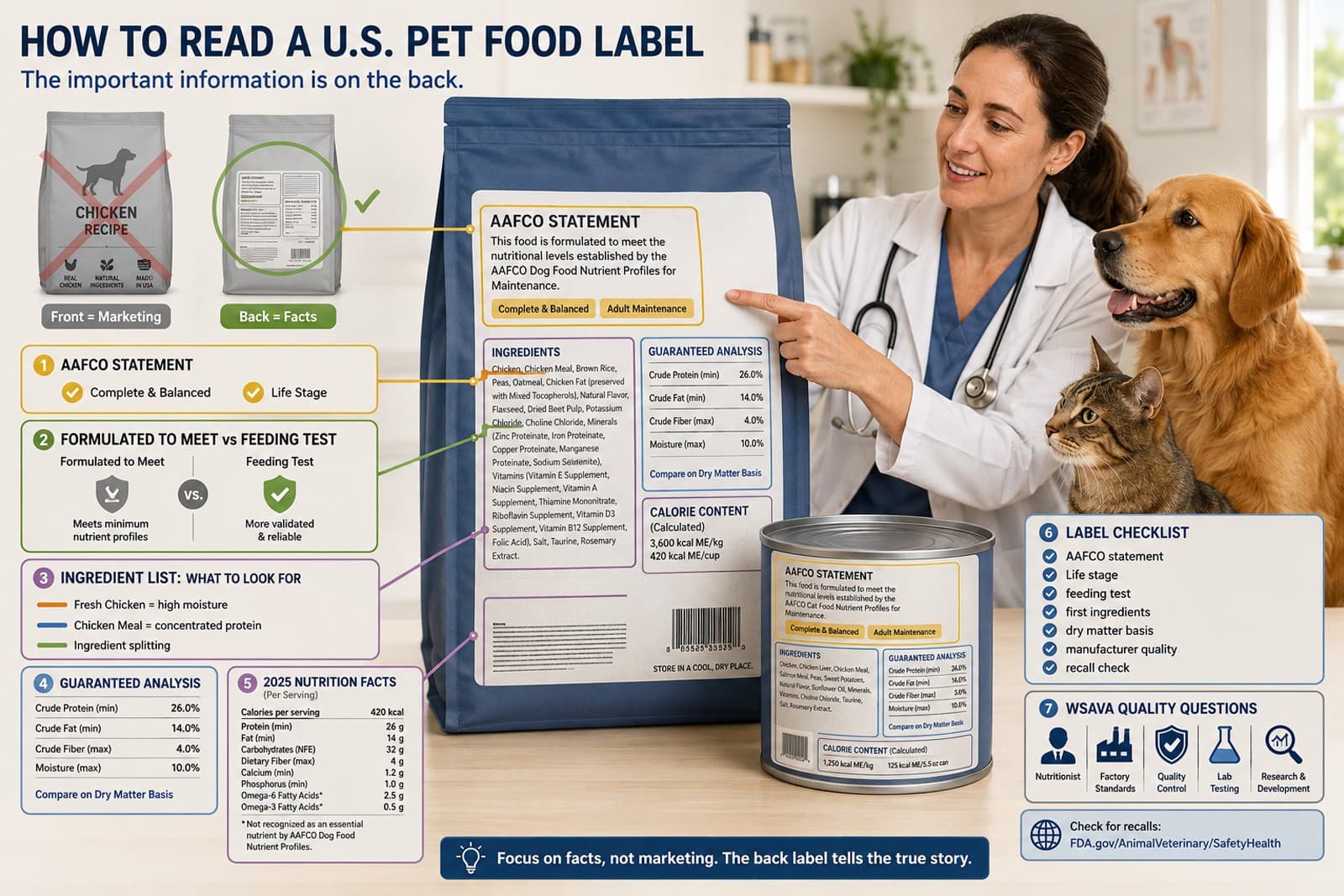
Pet food labels are dense, regulated documents that contain almost everything you need to know about a product — if you understand the code. Here is how to decode the AAFCO statement, ingredient list, guaranteed analysis, and the new 2025 Nutrition Facts panel.
2026-05-08
Pet Feeding
Wet vs Dry Pet Food: What the Science Actually Says
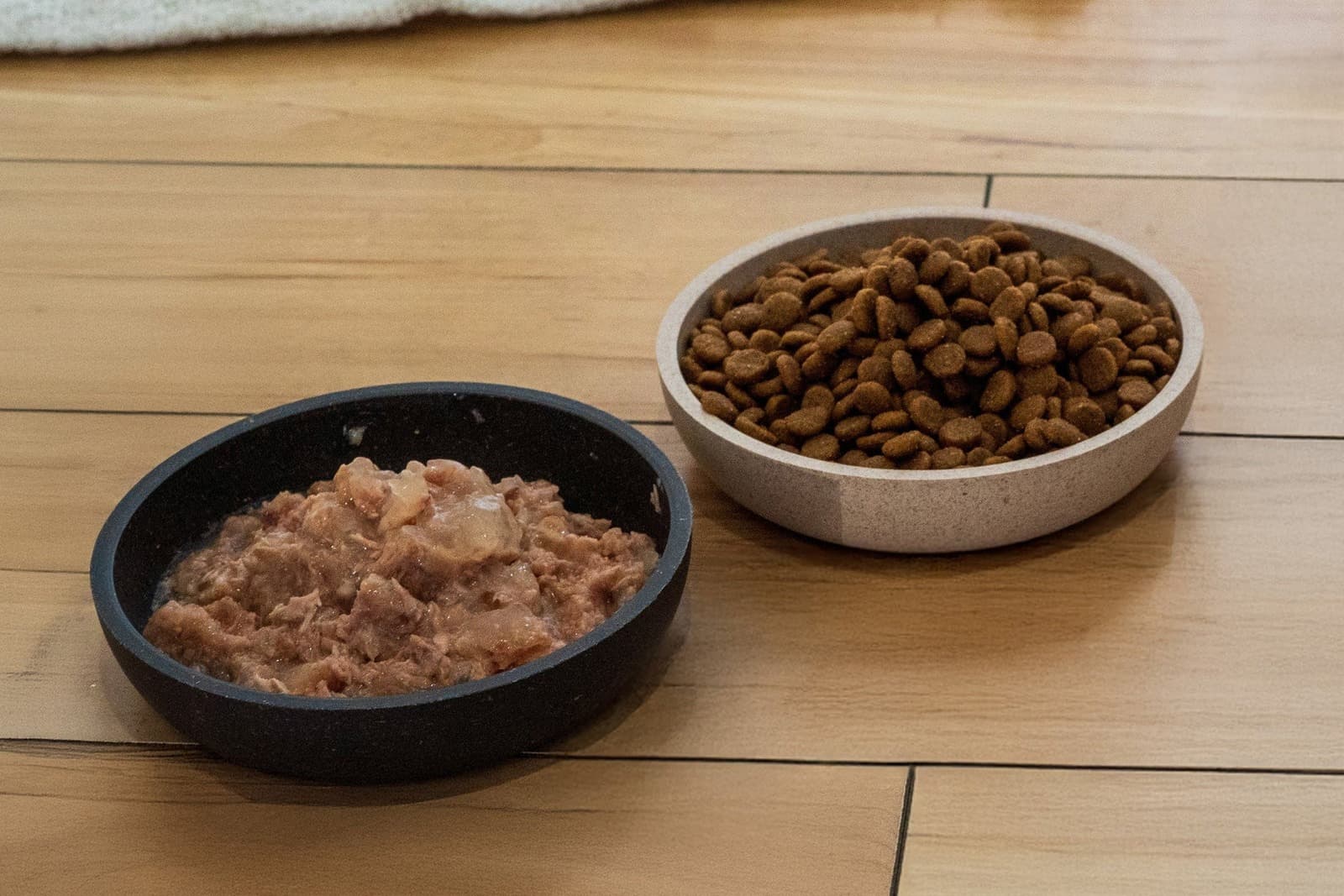
The wet vs dry food debate is more nuanced than most marketing suggests. Here is what the moisture content data, urinary health research, dental claims, and cost analysis actually show — and why mixed feeding often makes the most sense.
2026-05-05

Pet Feeding
How Much to Feed Your Pet: Calorie Needs by Size and Life Stage
Pet food bag instructions are usually wrong for your specific pet. Here is the simple veterinary formula for calculating actual calorie needs, plus the lifestyle and life-stage multipliers that get you to the right portion size.
2026-05-03