PET FEEDING · 5 MIN READ
Wet vs Dry Pet Food: What the Science Actually Says
The wet vs dry food debate is more nuanced than most marketing suggests. Here is what the moisture content data, urinary health research, dental claims, and cost analysis actually show — and why mixed feeding often makes the most sense.
Advertisement
The Basic Difference
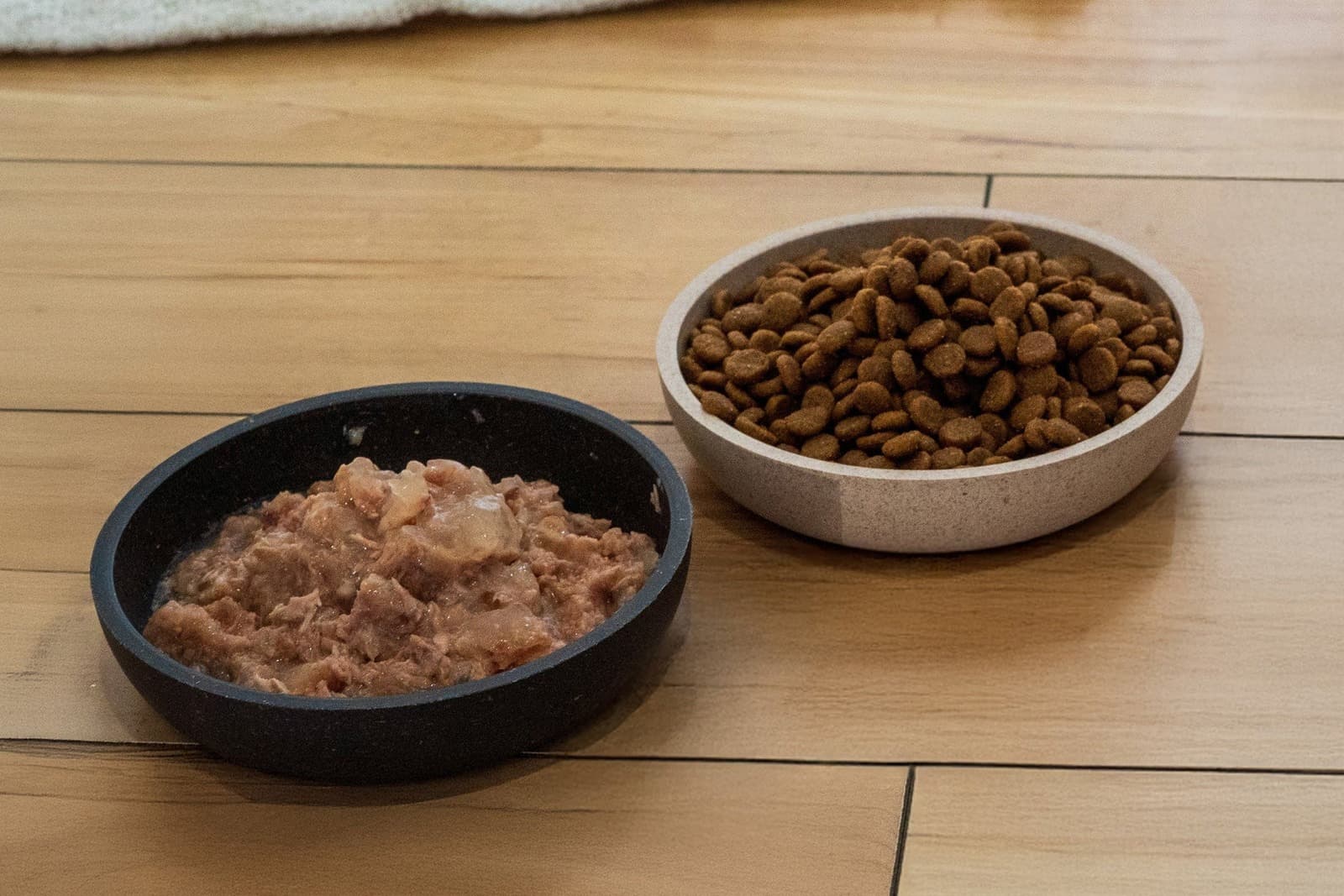
The headline difference between wet and dry pet food is moisture content:
- Wet/canned food: 70-80% water
- Dry/kibble food: 10-12% water
- Semi-moist food: 25-35% water (less common; often higher in sugar/preservatives)
The downstream effects of that single difference — hydration, urinary health, calorie density, dental abrasion, palatability, cost, storage — drive the entire wet vs dry debate. Both formats can be nutritionally complete (look for the AAFCO Nutritional Adequacy Statement). The choice is rarely about nutrition and almost always about which format better fits your specific pet.
Hydration: Where Wet Wins Clearly
Cats are descended from desert ancestors and have a notoriously low thirst drive. Many cats simply do not drink enough water, particularly when fed exclusively dry food. Studies consistently show cats on wet diets have higher total water intake and more dilute urine than cats on dry-only diets.
Dogs are more reliable drinkers, but seniors, dogs in hot climates, dogs with kidney disease, and small breeds prone to dehydration also benefit from the additional moisture in canned food.
Urinary Health: Especially Cats
The urinary health argument is strongest for cats. Higher water intake produces more dilute urine, which:
- Reduces concentration of crystals and minerals that can form bladder stones.
- Flushes the urinary tract more frequently.
- Lowers the risk of feline lower urinary tract disease (FLUTD), a common and sometimes life-threatening condition in cats.
For cats with a history of urinary issues, veterinary internists frequently recommend predominantly or exclusively wet food. For cats with crystals or stones, prescription urinary diets (in wet or dry form, depending on the case) are often prescribed.
For dogs, the urinary connection is less dramatic but still present. Dogs prone to urinary stones (Dalmatians and other predisposed breeds) may benefit from added moisture.
Dental Health: The Dry Food Myth (Mostly)
One of the most persistent claims is that dry food helps clean teeth. The reality is more limited than the marketing suggests.
- Standard kibble shatters on first contact with teeth — much like a cracker — and provides minimal abrasive cleaning. Studies show modest plaque reduction at most.
- Specialized dental kibble (with the Veterinary Oral Health Council seal) is engineered to flex rather than shatter, providing a longer scrubbing motion. These do show measurable plaque reduction.
- Wet food alone does not actively cause dental disease — but it provides no mechanical cleaning either.
The veterinary consensus is that diet alone is not adequate dental care for any pet. The gold standard is daily tooth brushing combined with regular professional cleanings. Dental kibble or treats add modest support; they do not replace brushing.
Calorie Density and Weight Management
By weight, dry food is much more calorie-dense than wet food. A cup of typical dry kibble contains 350-450 calories; a 5.5 oz can of wet food typically contains 150-250 calories. This has practical implications:
- For weight loss, wet food is often easier — more volume per calorie helps pets feel fuller.
- For weight gain (recovery, working dogs), dry is more efficient.
- For free-feeding, dry is the only practical option (wet food spoils within an hour or two at room temperature).
- Portion control is critical with both — bag instructions are usually overestimates.
Cost Comparison
For most adult dogs and cats, dry food costs significantly less per calorie than wet food. Rough U.S. averages:
| Pet size | Dry food/month | Wet food/month |
|---|---|---|
| 10 lb cat | $15-$30 | $45-$90 |
| 25 lb dog | $25-$50 | $80-$150 |
| 60 lb dog | $50-$100 | $200-$400 |
The cost premium for wet food over dry can be 2-4x. For multi-pet households, the difference is meaningful in monthly budgeting.
Convenience and Storage
| Dry | Wet | |
|---|---|---|
| Shelf life (sealed) | 12-18 months | 2-5 years |
| Shelf life (opened) | 4-6 weeks if airtight | 2-3 days refrigerated |
| Free-feeding | Yes | No (1-2 hours max at room temp) |
| Travel | Easy | Bulky, requires refrigeration after opening |
| Mess | Minimal | Requires bowl cleaning between meals |
Mixed Feeding: Often the Best Answer
For many pets, the best approach is a combination of wet and dry. Common patterns:
- Wet morning + dry evening — provides hydration boost while keeping food costs reasonable.
- Dry as base + wet topper — adds moisture and palatability while keeping the base economical.
- Wet for primary meals + dry for free-feeding — useful for cats whose owners want hydration support but cannot be home for every meal.
When mixing, calculate calories from both portions to avoid overfeeding. Most pets do not need both at every meal — alternating works fine.
Special Situations
Cats with kidney disease
Wet food (especially prescription kidney diets) is almost always preferred. The added moisture significantly reduces kidney workload.
Pets with diabetes
Both wet and dry diabetic management diets exist. Wet often easier for cats; consistent timing matters more than format.
Senior pets with dental disease
Wet food is easier to chew. Pets that have lost teeth from periodontal disease often eat far better on canned food.
Pets with food sensitivities
Wet and dry both come in limited-ingredient and hydrolyzed-protein formulations.
Pets recovering from illness
Wet food is often more palatable for sick pets with reduced appetite. Warming wet food slightly intensifies aroma and may improve acceptance.
What Does Not Settle the Debate
- Whether wet food causes dental disease. The evidence does not support this claim.
- Whether dry food causes urinary issues in cats. Dry food alone is not the cause of FLUTD; many factors interact, including stress, weight, breed, and water intake.
- Whether wet food is more natural. Both are processed; both can be complete and balanced.
Practical Setup for Mixed Feeding
If you decide to mix wet and dry, a few logistics make it sustainable:
- Use separate bowls. Wet food in one shallow bowl, dry kibble in another. Mixed in the same bowl, dry kibble absorbs moisture and becomes unappetizing within an hour.
- Calculate the right portions. Use the calorie content listed on each food, not the bag's volume guidance. Half a can plus 0.5 cup of kibble might be 250 calories — match that to your pet's daily target.
- Buy smaller cans. Larger cans waste once opened (2-3 day fridge life); 3 oz pouches or small cans avoid waste for cats.
- Refrigerate opened wet food in airtight containers. Plastic lids are sold for most can sizes.
- Warm wet food briefly if your pet eats reluctantly. Room temperature or slightly warm food has more aroma than refrigerator-cold food.
The Bottom Line
Wet vs dry is a real choice with measurable tradeoffs — but it is not a binary question of one being categorically right and the other categorically wrong, despite how the marketing often frames it. For most cats, adding at least some wet food to the diet improves hydration and urinary health enough that veterinary nutritionists generally recommend it where the budget allows for it. For most dogs, either format works as long as the food is complete and balanced and the calories are correct. Mixed feeding combines the strengths of both. The single biggest factor in your pet's nutrition is not wet vs dry — it is whether the food is appropriate for their life stage and you are feeding the right amount.
This article is for informational purposes and is not veterinary nutrition advice. For specific dietary recommendations for your pet, consult your veterinarian or a board-certified veterinary nutritionist (DACVN).
RELATED READING
More from Pet Feeding

Pet Adoption
Shelter vs. Rescue vs. Breeder: Which Is Right for You?
A clear-eyed look at the main paths to bringing a pet home in the U.S. — what each costs, what you actually get, and the red flags to watch for so you choose with confidence.
2026-05-02

Pet Breed
Pure Breed vs Mixed Breed: Health, Temperament, and the Real Differences
The pure breed vs mixed breed debate has been going on for decades. Each side overstates its case. Here is what the evidence actually shows on health, temperament, predictability, and cost — and when each choice makes sense.
2026-04-26
Pet Feeding
How to Read a Pet Food Label
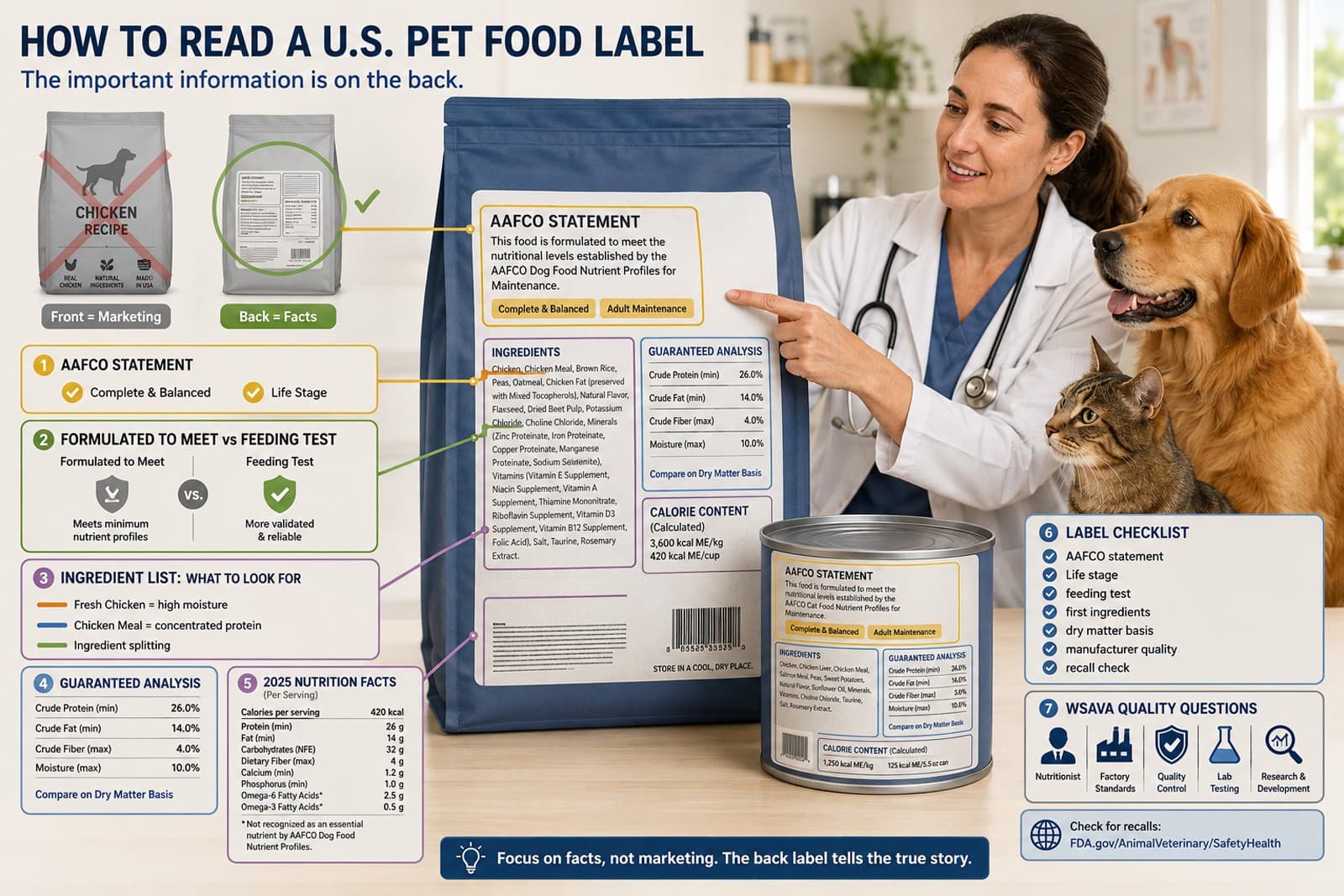
Pet food labels are dense, regulated documents that contain almost everything you need to know about a product — if you understand the code. Here is how to decode the AAFCO statement, ingredient list, guaranteed analysis, and the new 2025 Nutrition Facts panel.
2026-05-08