PET BREED · 6 MIN READ
AKC Breed Groups Explained: From Sporting to Toy
The AKC organizes 200+ breeds into seven groups based on their original purpose. Each group reflects a distinct temperament cluster — what the dogs were bred to do shapes how they live with you today.
Advertisement
Why Breed Groups Matter
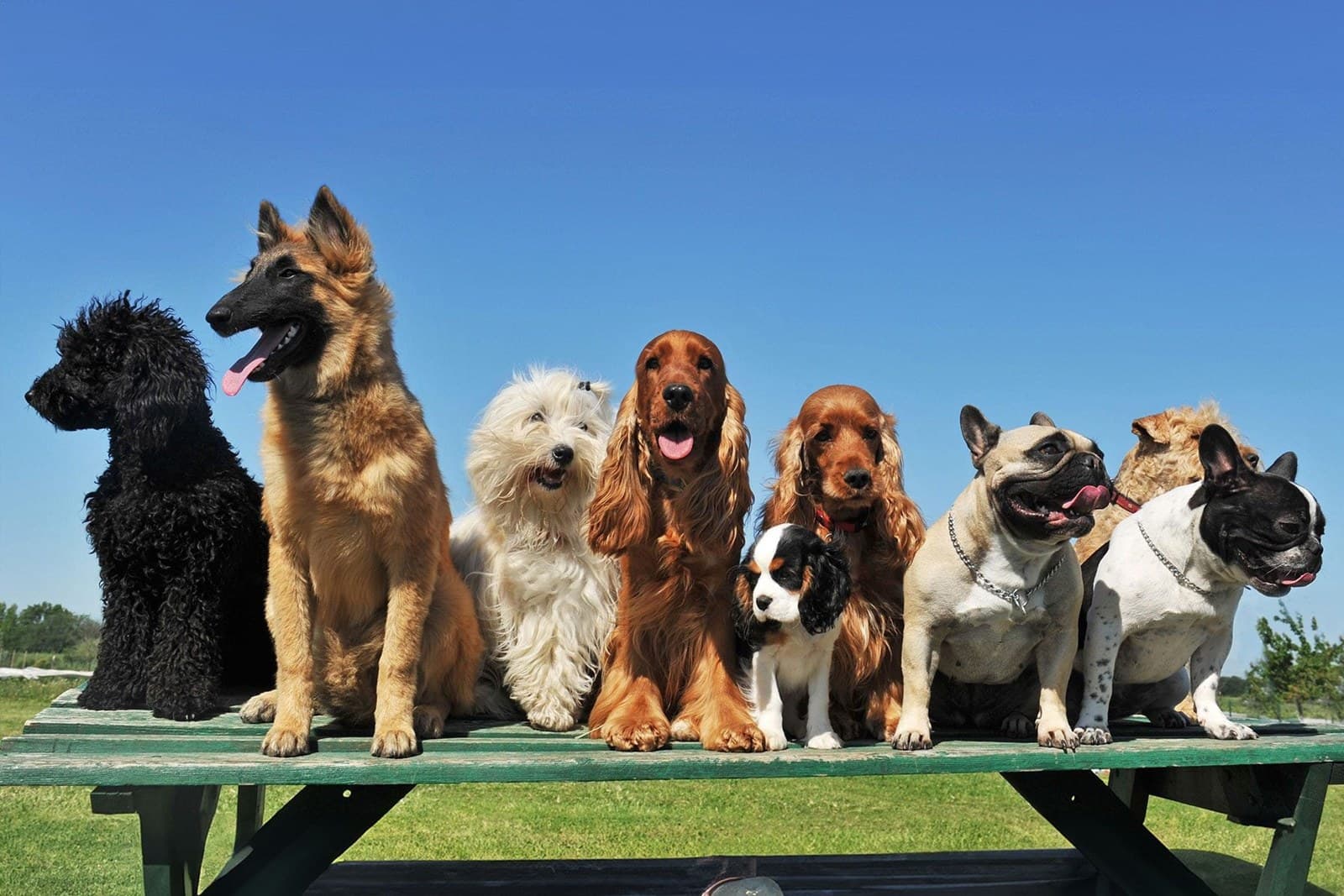
The American Kennel Club organizes its 200+ recognized breeds into seven distinct groups based on the original purpose for which the breeds were developed. Each group reflects a fundamental temperament cluster — what the dogs were bred to do, how they were bred to think, and how they tend to interact with humans and other animals.
For prospective owners, understanding the breed groups is one of the highest-leverage shortcuts to predicting what a specific breed will be like to live with. A Vizsla and a Golden Retriever are both Sporting Group dogs; they share more in common with each other than either does with a Bulldog (Non-Sporting) or a Doberman (Working).
The 7 AKC Breed Groups
1. Sporting Group
Bred to assist hunters by finding, flushing, retrieving, or pointing out game birds. Includes:
- Labrador Retriever, Golden Retriever, Chesapeake Bay Retriever
- English Setter, Irish Setter, Gordon Setter
- Cocker Spaniel, English Springer Spaniel, Boykin Spaniel
- Vizsla, Weimaraner, German Shorthaired Pointer, Brittany
Typical traits: active, energetic, friendly with humans and most other dogs, trainable, social, water-loving (most retrievers). Need daily structured exercise. Tend to do well with families.
2. Hound Group
Bred to assist hunters by tracking or pursuing prey, divided into sighthounds (chase by sight) and scenthounds (track by smell). Includes:
- Sighthounds: Greyhound, Whippet, Afghan Hound, Saluki, Borzoi
- Scenthounds: Beagle, Basset Hound, Bloodhound, Coonhound, Foxhound
- Dachshund (uniquely a low-built scenthound)
Typical traits: independent (bred to work without close human direction), strong prey drive, often vocal (baying or howling). Sighthounds are surprisingly low-energy at home but capable of explosive outdoor speed. Scenthounds are nose-driven and difficult to recall once on a scent.
3. Working Group
Bred for guarding, drafting (pulling), and other physical tasks requiring strength. Includes:
- Boxer, Doberman Pinscher, Rottweiler, Great Dane
- Bernese Mountain Dog, Saint Bernard, Newfoundland
- Siberian Husky, Alaskan Malamute
- Mastiff varieties (English Mastiff, Cane Corso, Neapolitan Mastiff)
Typical traits: large and powerful, intelligent, loyal to family, requires experienced handling and consistent training. Many working breeds are guardian-oriented and do not warm to strangers quickly. Not first-time-owner friendly without preparation.
4. Terrier Group
Bred to dig out and dispatch vermin (foxes, rats, badgers). Includes:
- Jack Russell Terrier (now Parson Russell), Cairn Terrier, West Highland White
- Bull Terrier, Staffordshire Bull Terrier, American Staffordshire Terrier
- Airedale Terrier (the largest), Scottish Terrier, Welsh Terrier
Typical traits: tenacious, energetic, often vocal, strong prey drive, dog-on-dog selectivity (many terriers do not get along with other dogs). Smaller terriers are not low-energy despite their size.
5. Toy Group
Bred specifically as companion animals, often miniaturized versions of working dogs. Includes:
- Chihuahua, Pomeranian, Yorkshire Terrier (toy-sized)
- Maltese, Pug, Pekingese, Shih Tzu
- Cavalier King Charles Spaniel, Toy Poodle, Italian Greyhound
Typical traits: small (under 10-15 lb), portable, lap-friendly, attached to humans. Energy varies widely — some are lap dogs, others are essentially small terriers. Often vocal. Adaptable to apartments.
6. Non-Sporting Group
The miscellaneous bucket — breeds that do not fit cleanly into other groups. Includes:
- Bulldog, French Bulldog, Boston Terrier
- Bichon Frise, Standard Poodle, Lhasa Apso
- Dalmatian, Chow Chow, Shar-Pei
- Keeshond, Tibetan Spaniel, Schipperke
Typical traits: heterogeneous group with no unifying trait. Each breed must be evaluated individually rather than by group characteristics.
7. Herding Group
Bred to control livestock through movement, eye contact, and barking. Includes:
- Border Collie, Australian Shepherd, Old English Sheepdog
- German Shepherd Dog, Belgian Malinois
- Pembroke Welsh Corgi, Cardigan Welsh Corgi
- Shetland Sheepdog, Collie
Typical traits: highly intelligent, energetic, work-driven, often anxious without sufficient mental stimulation. Tend to herd anything that moves — including children, cars, and other pets. Need committed exercise and training. Among the most demanding breeds for pet households.
The 8th Category: Miscellaneous
The AKC Miscellaneous Class is a temporary classification for breeds working toward full recognition. As of 2026, breeds in Miscellaneous include the Mudi, Russian Tsvetnaya Bolonka, and Bracco Italiano, among others. Once recognition is finalized, breeds graduate into one of the seven main groups.
The 8th (Real) Category: Mixed Breeds
The vast majority of U.S. dogs are mixed-breed. The AKC has a Canine Partners program for mixed-breed dogs to compete in performance events but does not classify them by breed group. For pet ownership purposes, a mixed-breed dog's behavior often reflects whichever breed group's traits are most strongly inherited — though prediction is unreliable in true mixes.
How to Use This Information
When you are looking at a specific breed:
- Identify the group — most breed information sources (AKC, Wikipedia, breed club websites) will list it.
- Read the group's general characteristics as a starting point for what to expect.
- Then read the specific breed for variations from group norms.
- Match against your lifestyle using the framework from any breed-selection guide.
This three-layer approach — group → breed → individual — is dramatically more accurate than picking based on breed alone.
Common Misconceptions
- Sporting Group dogs always need lots of exercise. Mostly true, but Cocker Spaniels and English Setters are calmer than Vizslas and Weimaraners.
- Toy Group dogs are all calm lap dogs. False. Yorkies and Jack Russells are essentially terriers in toy bodies.
- Working Group breeds are all guardians. Some are; Newfoundlands and Saint Bernards are gentle nannies, not guardians.
- Herding Group dogs are always good with kids. Often true for the dog, but the dog will try to herd the children — sometimes by nipping ankles.
Other Registries: UKC, FCI, and TICA
The AKC is not the only dog registry. Other major bodies organize breeds slightly differently:
- United Kennel Club (UKC). The second-largest U.S. registry. Recognizes some breeds the AKC does not (e.g., American Pit Bull Terrier). Uses 8 breed groups including Companion Dog and Sight Hound.
- Federation Cynologique Internationale (FCI). The international body covering 100+ countries. Uses 10 groups, organized by historical function and geographic origin.
- The International Cat Association (TICA). Recognizes 73 cat breeds and is the largest cat registry in the world. Different cat registries (CFA, TICA, GCCF) recognize different breeds and use different standards.
For most U.S. owners, the AKC framework is sufficient. International or specialty breeds may require looking up UKC or FCI standards.
The Lifestyle-Match Heuristic
A useful rough heuristic when scanning breeds by group:
- Active singles or active couples without kids: Sporting Group dogs do well.
- Families with kids and yards: Sporting Group, gentle Working breeds (Newfoundland, Bernese), some Herding (Corgis).
- Apartment dwellers, lower activity: Toy Group, less-active Non-Sporting (Bulldog, Boston Terrier).
- Experienced owners wanting work: Herding Group, working-line Working Group.
- First-time owners: Sporting Group, gentle Toy Group, calm Non-Sporting.
The Bottom Line
The AKC breed groups give you a useful first-order prediction of what a specific breed will be like. Sporting and Toy groups tend to be most pet-household-friendly; Working and Herding groups need more experienced handling. Use the groups as a starting point for breed research, not a final answer — individual variation within any group is large, and the specific dog you adopt always matters more than the category they belong to.
If you take one thing from this overview: the group tells you what the breed was bred to do. A dog bred for centuries to herd, hunt, guard, or pull will retain that drive even in a household setting. Understanding what your prospective dog was designed for is the single best predictor of what you will need to provide for them across the next decade of life together.
RELATED READING
More from Pet Breed
Pet Behavior
Separation Anxiety in Dogs: A Complete Guide
Up to 17% of U.S. dogs suffer from separation anxiety — a clinical panic disorder that produces real distress, real damage, and real suffering. Here is how to tell true separation anxiety from boredom, the evidence-based treatment plan, and when medication makes sense.
2026-05-08
Pet Behavior
Understanding Dog Body Language
Most dog bites in the U.S. could have been prevented if the human noticed earlier signals. Learn to read the full conversation — tail, ears, eyes, mouth, posture — including the famous Ladder of Aggression and the calming signals dogs use to defuse stress.
2026-05-07
Pet Behavior
Resource Guarding in Dogs: How to Recognize and Manage Safely
Resource guarding — growling, snapping, or biting over food, toys, or space — is one of the most common reasons dogs are surrendered to shelters. The good news: with the right approach, most resource guarding is manageable. Here is what to do, what not to do, and when professional help is essential.
2026-05-03