PET BEHAVIOR · 5 MIN READ
Decoding Cat Behaviors: Purring, Kneading, and More
Cats are not mysterious — they are subtle. Here is what your cat is actually saying when they purr, knead, head-butt, slow-blink, chatter at birds, bring you gifts, and the dozen other behaviors that make up daily cat communication.
Advertisement
Cats Are Communicating All the Time
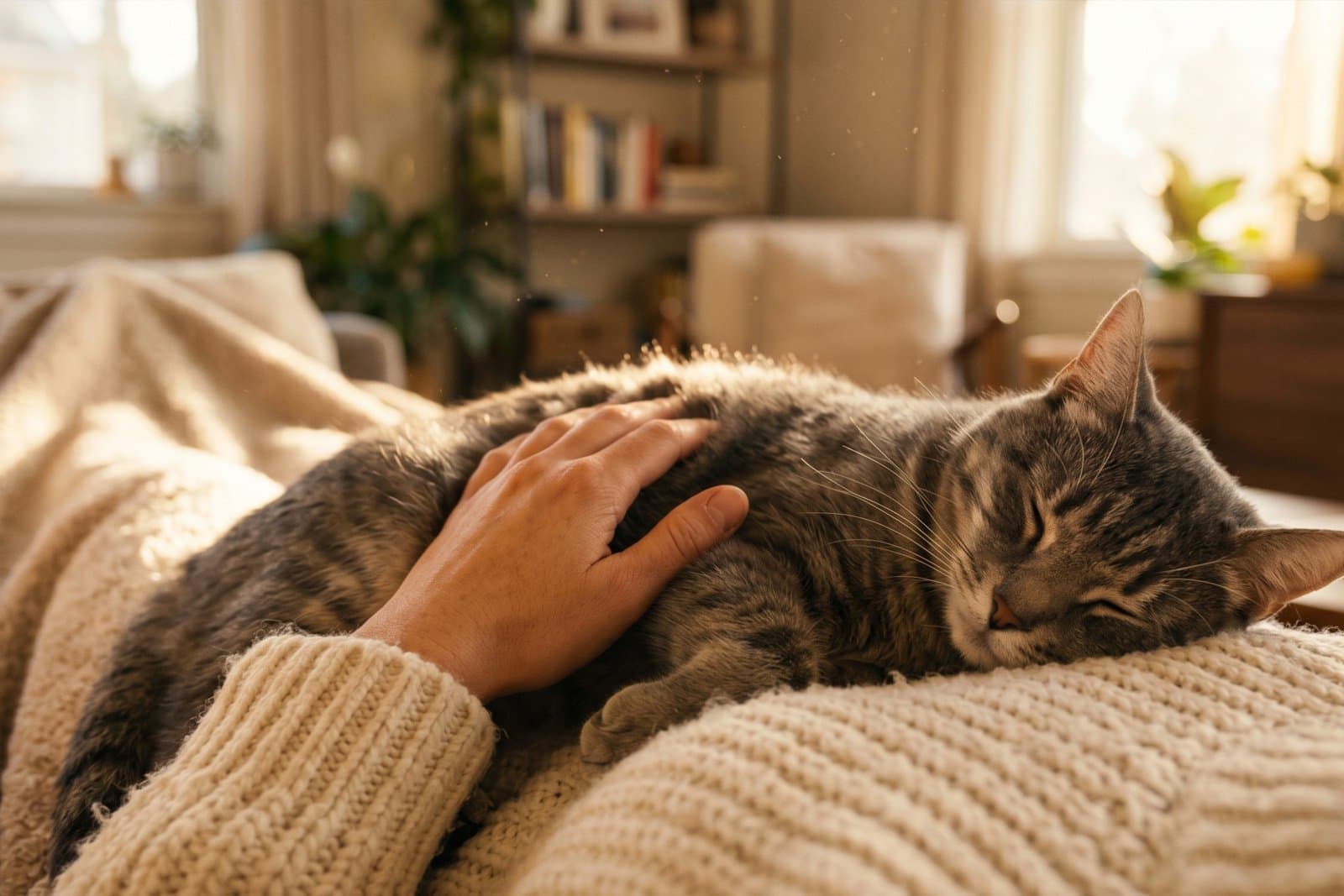
Cats have a reputation for being mysterious, but most of their behavior is highly readable once you know what each signal means. Purring, kneading, head-butting, slow blinking, chirping at birds, bringing prey home — each of these has a specific meaning rooted in evolution, kittenhood, or social dynamics. This guide decodes the most common cat behaviors and what they actually communicate.
Purring
The signature cat sound. Purring is produced by rapid contractions of the laryngeal muscles, occurring 25 to 150 times per second. The vibration moves air through the vocal cords, creating the characteristic rhythmic sound. Cats purr both while inhaling and exhaling, which gives the purr its continuous quality.
Why cats purr
- Contentment. The most common reason — a cat curled up purring while you scratch their head is genuinely happy.
- Mother-kitten communication. Mother cats purr to guide their kittens (born blind and deaf) toward nursing. Kittens learn to purr within days, beginning early communication with their mother.
- Self-soothing during stress. Cats also purr when injured, anxious, or sick. The purr appears to function as a self-calming mechanism.
- Healing. The 25-150 Hz frequency range of cat purring overlaps with frequencies that promote bone density and tissue healing in laboratory studies. The healing-purr hypothesis is widely cited though not fully proven.
- Solicitation purring. Cats sometimes embed a higher-frequency cry (similar to a baby's cry) within their purr when seeking food or attention. Owners often respond more to this solicitation purr than to a normal purr.
Context matters. A purring cat who is also hiding, refusing food, or avoiding contact may be using the purr as self-comfort. A vet visit is warranted.
Kneading (Making Biscuits)
Rhythmic alternating pawing — kneading, making biscuits, treading. This behavior originates in kittenhood: nursing kittens knead their mother's mammary area to stimulate milk flow. In adult cats, kneading indicates contentment, security, and often a signal of bonding.
Some cats knead with claws extended, sometimes painfully. This is not aggression — they are just enthusiastically expressing comfort. A folded blanket between you and the cat reduces the discomfort while preserving the bonding moment.
Bunting (Head-Butting)
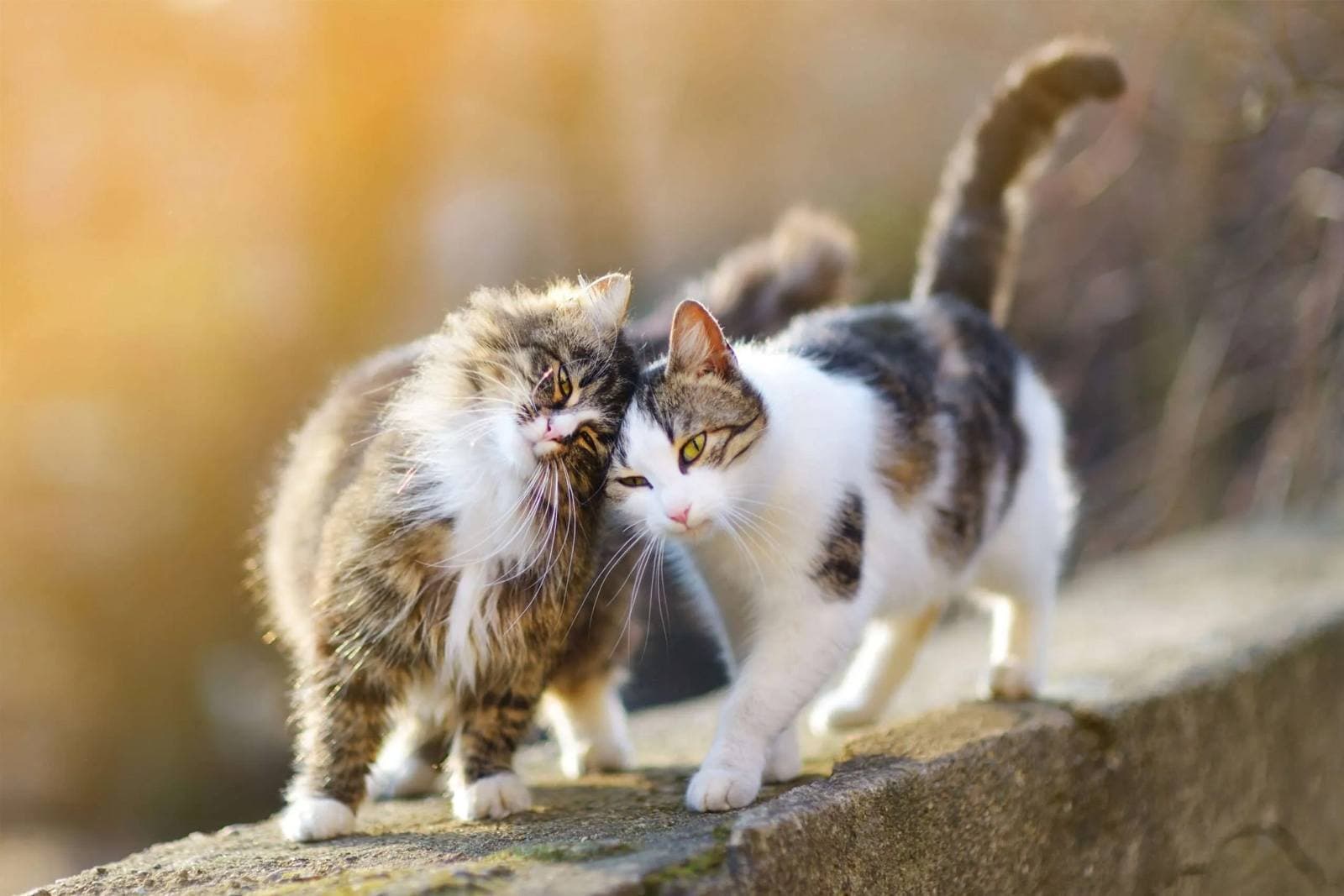
Cats have scent glands on their cheeks, chin, forehead, and the base of their ears. When a cat presses their head into you, rubs their face on you, or pushes their cheek against your hand, they are depositing facial pheromones — marking you as part of their territory and family.
This is one of the highest compliments a cat can pay. Returning a gentle head touch (not patting the top of the head, which most cats find aversive) is a welcome response.
Slow Blinking
The slow blink — eyes half-closed, slow opening and closing — is a feline sign of trust and relaxation. Recent research (peer-reviewed studies in 2020-2021) demonstrated that human-initiated slow blinks measurably improve human-cat bonding in shelter and home environments.
To slow-blink at your cat: relax your facial muscles, soften your gaze, slowly close your eyes for 1-2 seconds, then slowly open them. Many cats will return the slow blink. The exchange is the closest thing to a verbal I trust you cats can offer.
Chirping and Chattering at Prey
The strange staccato sound cats make when watching birds through a window. Theories on what it means:
- Hunting frustration vocalization.
- Attempted mimicry of bird calls.
- Practice of the killing bite muscles in anticipation of prey.
The most likely explanation combines all three. The chatter does not predict aggression; it is communication about excitement and frustration in safely contained form.
Tail Up Greeting
A confident, friendly cat approaches with their tail held straight up, often with a slight curl or question-mark hook at the tip. This is the social greeting cats give to other friendly cats — and to humans they consider safe.
If your cat greets you tail-up at the door, that is a meaningful gesture of comfort and welcome. Cats reserve this signal for known, trusted others.
Bringing Gifts
Cats who hunt and bring back prey or toys to their humans are sharing the way they would with kittens. Mother cats bring half-dead prey home to teach hunting; cats bringing toys to your bed or socks to your living room are likely acting on the same instinct.
Receive these gifts calmly — punishment confuses the cat about what is socially appropriate. For unwanted prey-bringing (real animals), keep the cat indoors during prime hunting times rather than punishing the gift.
The Cat Loaf (Tucked Paws Sit)
The classic loaf position — cat sitting upright with paws tucked under the body — is generally a sign of relaxed alertness. The cat is not curled up sleeping but also not on edge.
However, sick cats also adopt the loaf because it conserves energy and protects their belly. If your cat is loafing more than usual, eating less, grooming less, or hiding more, the loaf may be a clinical sign rather than relaxation.
Belly Display
A cat lying on their back with belly exposed is showing trust — but rarely inviting belly rubs. Most cats find belly contact deeply unpleasant; the soft underside is a vulnerable area, and even trusting cats often respond to belly touch with bites and kicks.
Read the belly display as: I trust you with my vulnerable parts. Not as: Please pet here. Most cat owners learn this through trial and error; a few cats are exceptions and genuinely enjoy belly rubs.
Tail Flicking and Lashing
A relaxed cat's tail moves slowly and purposefully. Quick flicks of the tail tip indicate mild irritation, focus, or rising agitation. A fully lashing tail (side-to-side fast movement) signals an angry or frustrated cat ready to disengage — or attack.
This is the most-missed signal in cat-petting interactions. Owners often interpret a tail-tip flick during petting as enjoyment when it actually means stop. Continuing past this signal is the most common cause of out-of-nowhere cat bites.
Hissing, Growling, Spitting
Hissing is a clear stop signal — fear, defensiveness, or genuine threat warning. It is not a personality flaw; it is communication.
The right response to a hissing cat is to back off, increase distance, and let them choose to engage on their terms. Approaching a hissing cat to show them you are not threatening usually escalates the response.
Vocalizations Beyond Meowing
- Meow. Almost exclusively used for human-cat communication. Adult cats rarely meow at each other.
- Trill or chirrup. A friendly greeting sound, often combined with the tail-up posture.
- Yowl. Long, distressed vocalization. Causes range from mating calls (unspayed cats) to cognitive dysfunction in seniors to medical pain.
- Caterwaul. Loud, drawn-out vocalization between cats — often inter-cat conflict or mating.
The Bottom Line
Cats are communicating all the time, often as much or more than dogs do — they just communicate in subtler signals and quieter sounds that owners often need to be taught to read. Once you know what to watch for, your cat becomes one of the most expressive companions in your life. The mysterious cat is mostly a misread cat; the relationship deepens dramatically when both species learn to listen, and most cat owners report a meaningful shift in connection once they start reading the small signals consistently.
For severe or persistent behavioral concerns, consult a certified dog trainer or veterinary behaviorist (DACVB).
RELATED READING
More from Pet Behavior
Pet Behavior
Separation Anxiety in Dogs: A Complete Guide
Up to 17% of U.S. dogs suffer from separation anxiety — a clinical panic disorder that produces real distress, real damage, and real suffering. Here is how to tell true separation anxiety from boredom, the evidence-based treatment plan, and when medication makes sense.
2026-05-08

Pet Behavior
Understanding Dog Body Language
Most dog bites in the U.S. could have been prevented if the human noticed earlier signals. Learn to read the full conversation — tail, ears, eyes, mouth, posture — including the famous Ladder of Aggression and the calming signals dogs use to defuse stress.
2026-05-07
Pet Behavior
Cat Body Language: A Complete Tail, Ear, and Eye Guide
Cats communicate as much as dogs do, but their signals are subtler and easier to miss. Here is the complete guide to reading your cat's tail, ears, eyes, whiskers, and posture — and what each combination tells you about how they actually feel.
2026-05-05