PET FEEDING · 5 MIN READ
Kitten Feeding Guide: From Weaning to Adulthood
Kittens grow more in their first year than in any subsequent year. Here is a complete week-by-week guide — from nursing through the transition to adult food at 12 months.
Advertisement
The First Year Sets Everything Up
Kittens grow more in their first year than in any subsequent year of life. By 12 months, most cats reach close to their adult weight. The nutrition supporting that growth — calories, protein, calcium, taurine, fatty acids — is fundamentally different from what an adult cat needs. Feeding a kitten correctly during this window is the single most consequential nutritional decision in their life.
This guide covers feeding stage by stage, with calorie targets, schedules, and what to avoid.
Birth to 4 Weeks: Nursing
Newborn kittens should nurse exclusively from their mother for the first four weeks. Mother's milk provides ideal nutrition plus colostrum — the first milk, rich in immune antibodies that protect the kitten through the first weeks of life when their own immune system is still developing.
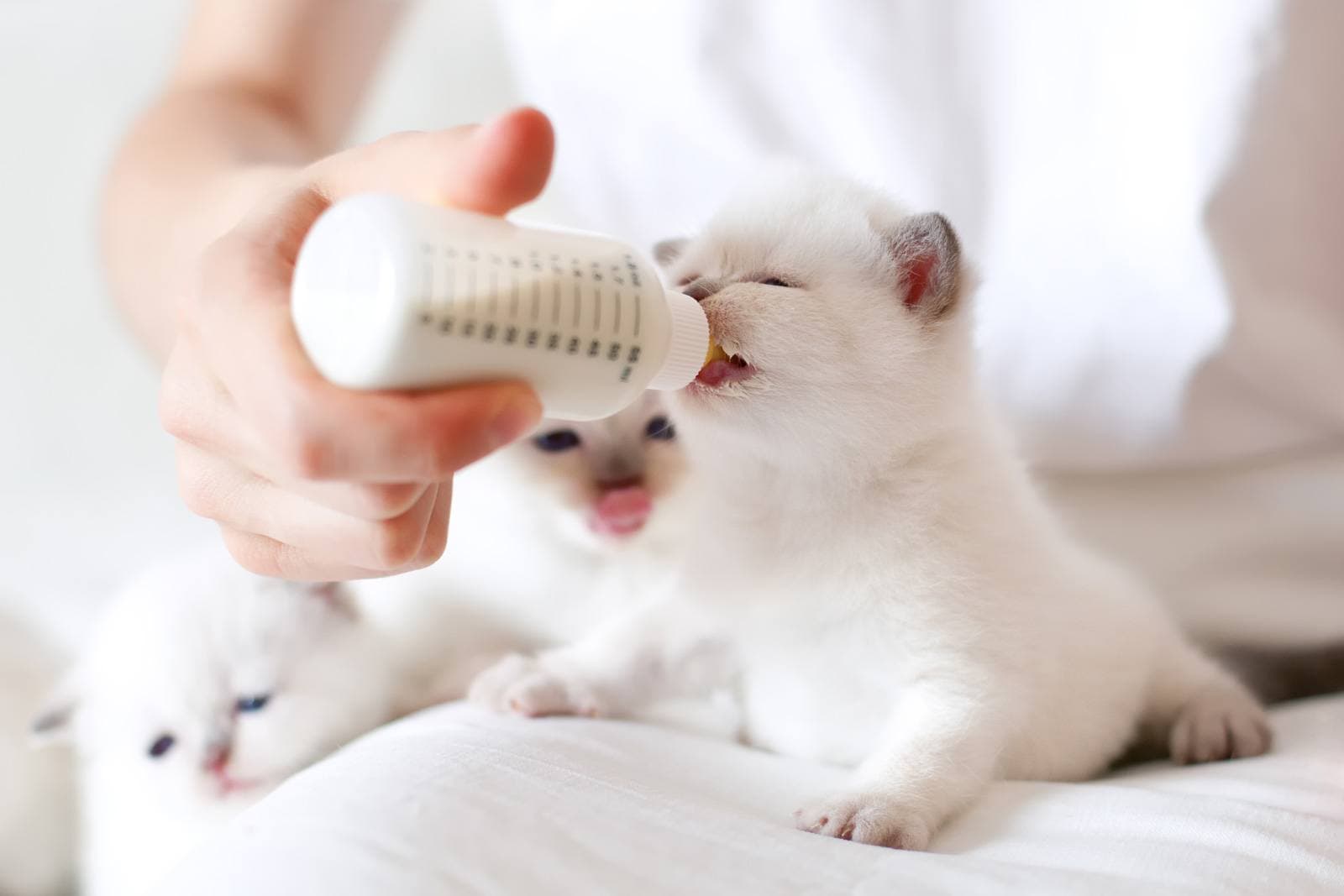
If the mother is unavailable (orphaned kittens, queen cannot produce milk), use a commercial kitten milk replacer (KMR). Never use cow's milk, goat's milk, or human infant formula — these lack the right nutrient profile and cause severe diarrhea, dehydration, and worse.
Bottle-feeding schedule
| Age | Feeding frequency | Approximate amount |
|---|---|---|
| 0-1 week | Every 2 hours | 2-6 ml per feeding |
| 1-2 weeks | Every 2-3 hours | 6-10 ml |
| 2-3 weeks | Every 3-4 hours | 10-14 ml |
| 3-4 weeks | Every 4-6 hours | 14-18 ml |
Bottle-feed in a horizontal position (never on the back) to prevent aspiration. Stimulate elimination by gently rubbing the genital area with a warm damp cloth after each feeding — kittens cannot eliminate independently until about 3 weeks.
4 to 8 Weeks: Weaning
Weaning is the transition from milk to solid food. Begin around 4 weeks by offering a gruel: kitten formula mixed with a small amount of canned kitten food, blended to a thin paste. Place in a shallow dish.
Most kittens initially walk through it before learning to eat. Gradually thicken the gruel over 2-3 weeks until kittens are eating solid wet kitten food without added formula. By 8 weeks, most kittens should be fully weaned.
Provide fresh water alongside meals starting around 5 weeks. Kittens learn quickly to drink from a bowl.
8 Weeks to 4 Months: Rapid Growth
This is the period of fastest growth. Calorie needs are 2.5-3 times the adult-cat baseline per pound of body weight. An 8-week-old kitten weighing 2 lb (about 0.9 kg) typically needs 160-200 calories per day; by 4 months at 4-5 lb, they need 250-350 calories.
What to feed
- Food labeled for growth or all life stages — the AAFCO statement should specify one of these. Adult maintenance food is inadequate.
- Wet, dry, or both. Most kittens benefit from a combination — wet food for hydration and palatability, dry food for free-feeding convenience.
- High-quality named animal proteins in the first 1-3 ingredients.
Feeding frequency
- 8-12 weeks: 4 small meals per day.
- 3-6 months: 3 meals per day.
- 6-12 months: 2 meals per day.
Many owners free-feed dry food during the kitten months. This works for cats who self-regulate; cats who eat compulsively may need scheduled meals.
4 to 6 Months: Slowing Growth
Growth rate begins to taper. Most kittens reach about half their adult weight by 4 months. Continue feeding kitten food, with portions adjusted to the kitten's actual growth and body condition.
This is also the typical age for spaying or neutering. Surgery affects metabolic rate immediately — calorie needs drop by roughly 25-30% post-spay/neuter. Adjust portions within a few weeks of surgery to prevent post-spay weight gain, which is one of the most common veterinary observations after kittens are altered.
6 to 12 Months: Final Growth Phase
Growth slows further but does not stop. Continue kitten food until 10-12 months for most cats; large-breed cats (Maine Coons, Ragdolls, Norwegian Forest Cats) may benefit from kitten food until 18-24 months when they finally stop growing.
Around 12 months, transition to adult cat food using the standard 7-10 day transition protocol. Mix 25% adult food with 75% kitten food for 3 days, 50/50 for 3 days, 75/25 for 3 days, then 100% adult.
How Much to Feed (Calorie Targets)
| Kitten age | Approximate weight | Daily calories |
|---|---|---|
| 2 months | 2 lb | 160-200 |
| 3 months | 3 lb | 200-250 |
| 4 months | 4 lb | 250-320 |
| 6 months | 5-6 lb | 250-350 |
| 9 months | 7-8 lb | 240-300 |
| 12 months (adult) | 8-10 lb | 200-280 |
Bag instructions are starting points; actual needs vary by individual. Weigh the kitten weekly during rapid growth and monthly thereafter; adjust portions based on the trend.
Foods to Avoid for Kittens
- Cow's milk. Most cats are lactose-intolerant; causes diarrhea.
- Adult cat food. Too low in calories and certain nutrients for growing kittens.
- Dog food. Lacks taurine, an essential amino acid for cats; causes blindness and heart failure if fed long-term.
- Raw meat. Pathogen risk and nutritional gaps. Especially dangerous for young immune systems.
- Foods toxic to cats: chocolate, onions, garlic, grapes, raisins, alcohol, raw bread dough, raw fish in large amounts.
Hydration
Kittens (like adult cats) have a low thirst drive. Strategies:
- Wet food provides 70-80% moisture.
- Multiple water bowls throughout the home.
- A water fountain — many cats prefer flowing water.
- Stainless steel or ceramic bowls (some cats dislike plastic).
Common Kitten Feeding Mistakes
- Feeding adult food too early. Stunts growth and causes deficiencies.
- Free-feeding without monitoring. Many kittens overeat and become overweight by 1 year.
- Skipping the wet/dry mix. Cats trained on only one form often refuse the other later.
- Not adjusting after spay/neuter. The most common cause of post-spay weight gain.
- Following bag instructions exactly. Bag instructions are averages; observe your specific kitten and adjust.
Special Situations
Bottle-fed orphan kittens
Orphaned kittens require around-the-clock feeding for the first few weeks. Use only commercial kitten milk replacer (KMR), never cow's milk. Warm to body temperature; bottle-feed slowly with the kitten on its stomach. Stimulate elimination with a warm damp cloth after each feeding for the first 3 weeks. Most foster organizations and rescues will help bottle-feeders find guidance and supplies.
Underweight or runt kittens
Small or underweight kittens may need supplemental feedings even while nursing. Offer KMR via a small syringe between mom's feedings. Vet check is warranted to rule out underlying issues.
Multi-kitten litters
Make sure each kitten has access to food without competition. Use multiple shallow plates spread out so dominant kittens cannot guard the food.
Adopted older kittens
If you adopt a kitten between 4-6 months, continue kitten food until at least 12 months. Bring whatever the shelter was feeding for the first 1-2 weeks, then transition to your preferred kitten food using the standard 7-10 day protocol.
The Bottom Line
Kitten nutrition is straightforward in principle: feed a complete and balanced kitten food (wet, dry, or both), measure portions, transition to adult food around 12 months, and adjust based on your specific kitten's weight and body condition. The first year is when feeding mistakes have the most consequence — both nutritional deficits and overfeeding can shape lifelong patterns. Get the basics right during the kitten months and the next 15 years of feeding decisions become significantly easier, with fewer surprises and a healthier baseline for your cat to age into.
This article is for informational purposes and is not veterinary nutrition advice. For specific dietary recommendations for your pet, consult your veterinarian or a board-certified veterinary nutritionist (DACVN).
RELATED READING
More from Pet Feeding

Pet Behavior
Cat Body Language: A Complete Tail, Ear, and Eye Guide
Cats communicate as much as dogs do, but their signals are subtler and easier to miss. Here is the complete guide to reading your cat's tail, ears, eyes, whiskers, and posture — and what each combination tells you about how they actually feel.
2026-05-05
Pet Behavior
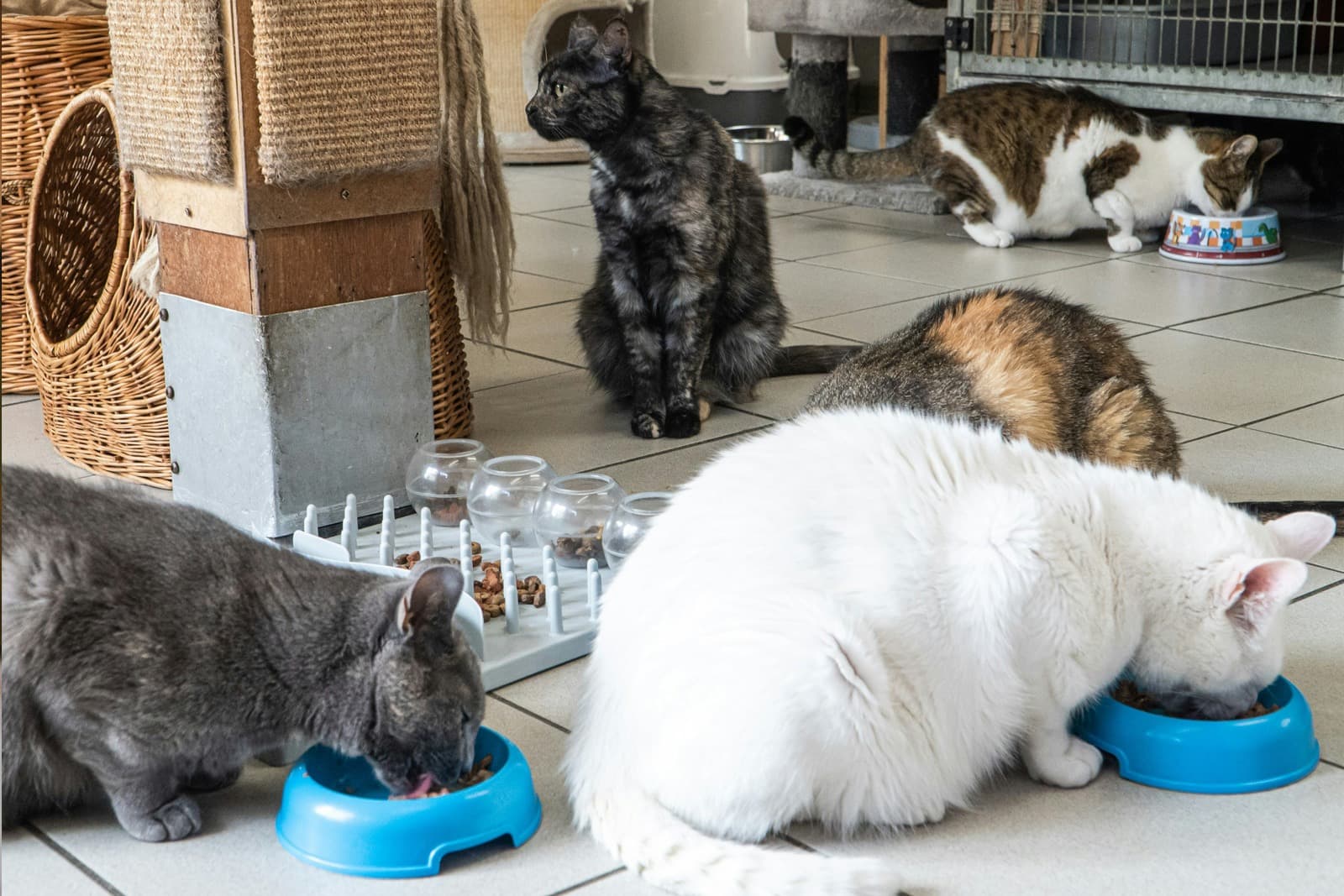
Multi-Cat Households: Reducing Tension and Conflict
Cats are not naturally pack animals — but with the right setup, multiple cats can coexist peacefully. Here is the resource math, the pheromone tools, and the introduction protocol that turns most multi-cat tension around.
2026-04-29

Pet Behavior
How to Introduce a New Pet to Your Existing Pet
A rushed introduction is the #1 cause of long-term household tension between pets. The slow, structured protocol below — different for dogs, cats, and mixed-species households — turns most introductions into peaceful coexistence within weeks.
2026-04-27