PET FEEDING · 5 MIN READ
Foods That Are Toxic to Pets: What Never to Share
The ASPCA Animal Poison Control Center handled more than 451,000 calls in 2024. Here are the most consequential pet toxins, what they cause, and the resources every owner should have on speed dial.
Advertisement
Why This List Matters
The ASPCA Animal Poison Control Center fielded more than 451,000 calls in 2024 — a 4% increase over the prior year. Human food and household products were the top two exposure categories, accounting for roughly a third of all calls. Many of these were preventable accidents involving common foods that owners did not realize were dangerous.
This guide covers the most consequential pet toxins, their typical clinical effects, what to do if exposure occurs, and the resources every pet owner should have on speed dial.
The First Number to Save
The ASPCA Animal Poison Control Center at (888) 426-4435 is staffed by veterinary toxicologists 24/7. There is a $95 consultation fee, but it is the fastest way to know whether your pet's exposure is a true emergency. Save this number in your phone before you ever need it.
Top Toxic Foods for Dogs and Cats
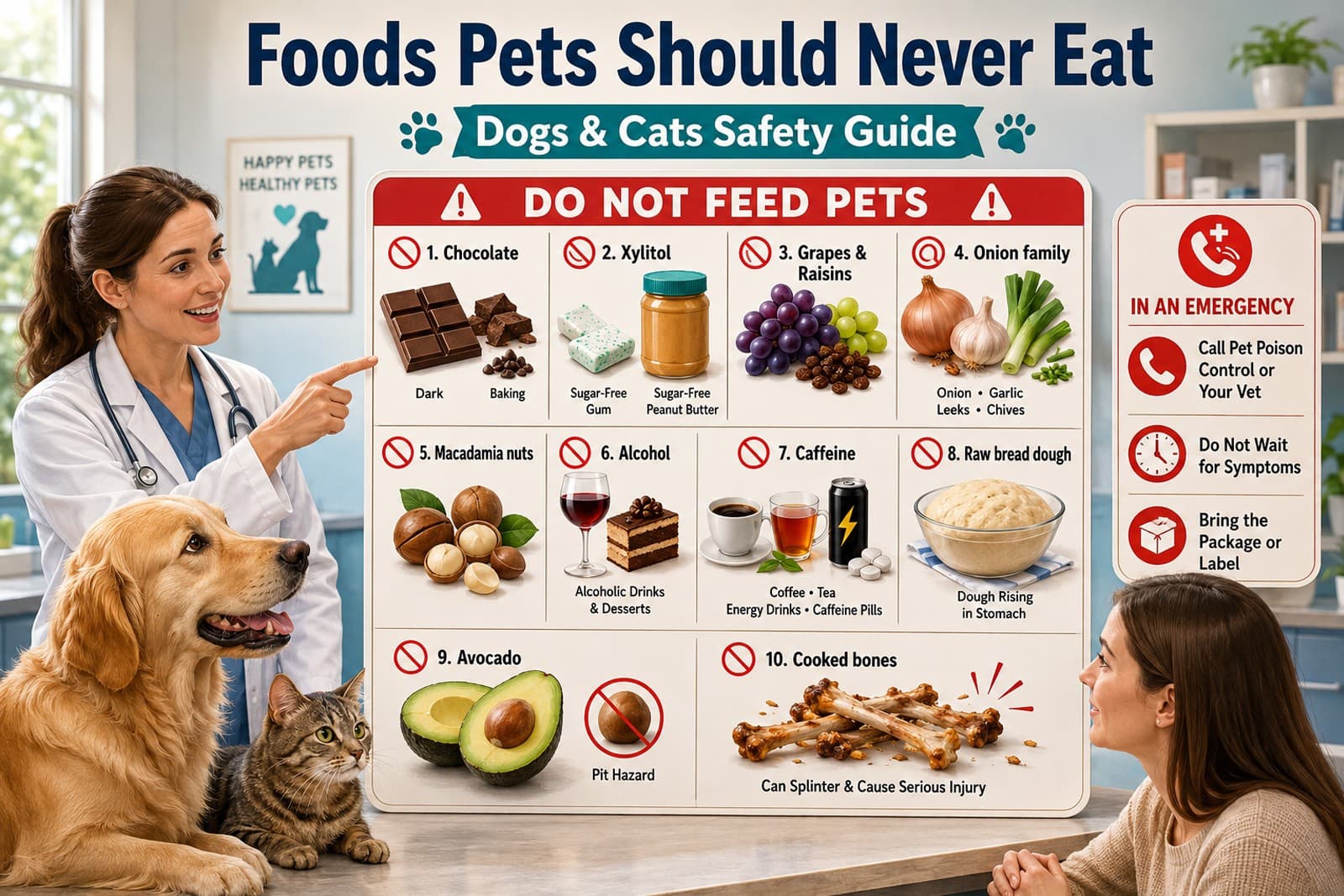
Chocolate and other methylxanthines
Chocolate contains theobromine and caffeine, both of which dogs and cats metabolize far slower than humans.
- Most toxic: baking chocolate, dark chocolate.
- Less toxic but still dangerous: milk chocolate.
- Symptoms: vomiting, diarrhea, increased heart rate, restlessness, tremors, seizures.
- Other sources: cocoa powder, chocolate-covered espresso beans, cocoa mulch (used in gardening).
Xylitol
An artificial sweetener increasingly common in sugar-free gum, baked goods, peanut butter, mints, toothpaste, and many other products. Even small amounts cause a rapid insulin release in dogs leading to dangerously low blood sugar; larger doses cause liver failure.
- Critical for dogs. Xylitol toxicity has not been documented in cats, but assume the same caution.
- Symptoms: vomiting, weakness, collapse, seizures, jaundice (with liver involvement).
- Always read peanut butter labels before sharing with your dog.
Grapes and raisins
The exact toxic compound was identified in recent research as tartaric acid. Sensitivity varies dramatically between dogs — some tolerate small amounts, others develop kidney failure from a single grape.
- Symptoms: vomiting, diarrhea, lethargy, decreased urination, kidney failure.
- Includes: all forms of grapes, raisins, currants, and grape-derived products like wine and cream of tartar.
Onions, garlic, leeks, chives
The allium family damages red blood cells in both dogs and cats, causing hemolytic anemia. Cats are more sensitive than dogs.
- All forms: raw, cooked, powdered, dehydrated, in baby food, in seasoning blends.
- Symptoms: may not appear for several days; weakness, pale gums, dark-colored urine, vomiting.
Macadamia nuts
Specific to dogs. The mechanism is not fully understood.
- Symptoms: weakness (especially in hindquarters), tremors, vomiting, fever, depression.
- Symptoms typically appear within 12 hours and resolve in 24-72 hours.
Alcohol
Pets cannot metabolize ethanol the way humans can. Sources include alcoholic beverages, raw bread dough (yeast produces ethanol during rising), some perfumes and mouthwashes.
- Symptoms: vomiting, disorientation, depression, low body temperature, low blood sugar, coma.
Caffeine
Coffee, tea, energy drinks, soda, caffeine pills. Dogs and cats are highly sensitive.
- Symptoms: hyperactivity, vomiting, increased heart rate, tremors, seizures.
Raw bread dough
Yeast produces both alcohol and gas as it rises in the warm pet stomach. Causes both alcohol toxicity and severe stomach distention (potentially gastric dilatation-volvulus in deep-chested dogs).
Avocado
Toxic primarily to birds and large animals; less acute toxicity in dogs and cats but the pit is a serious choking and obstruction risk. Persin (the toxic compound) can cause GI upset.
Cooked bones
Cooked bones splinter easily and can cause perforations of the GI tract. Raw bones present pathogen risk; small bones present choking risk. The general veterinary recommendation: skip bones entirely.
Sugar-free or low-sugar peanut butter
Often contains xylitol. Always check the label; choose only peanut butter with no added sweeteners.
Toxic Plants Worth Knowing
Lilies (cats specifically)
Easter lily, tiger lily, Asiatic lily, and several others cause acute kidney failure in cats — even from small exposures (eating a leaf, drinking from the vase water). One of the most dangerous common houseplants. Owners with cats should avoid lilies entirely.
Sago palm
All parts toxic to dogs and cats; seeds most concentrated. Causes liver failure with mortality rate exceeding 50% in dogs that consume seeds.
Tulip and hyacinth bulbs
Bulbs concentrate the toxic compounds. Common in spring gardens.
Other commonly toxic houseplants
- Pothos (extremely common houseplant).
- Philodendron.
- Dieffenbachia.
- Peace lily (causes oral irritation, less acutely dangerous than true lilies).
- Oleander (highly toxic; affects heart).
- Azalea/rhododendron.
- Yew.
The full ASPCA toxic plants database lists hundreds of species. Check before introducing any new plant to a home with pets.
Other Common Household Toxins
- Antifreeze (ethylene glycol). Sweet-tasting and rapidly fatal. Even small amounts cause kidney failure. Pet-safe propylene glycol versions exist; check labels.
- Rodenticides. Cause internal bleeding (anticoagulant types) or neurological damage (newer types). Pets eat them directly or are poisoned by eating poisoned rodents.
- Over-the-counter human medications. The single largest category in the ASPCA's annual top toxins list. Ibuprofen, acetaminophen (acetaminophen is fatal to cats even in small doses), cold medicines, sleep aids.
- Prescription medications dropped on the floor.
- Human dietary supplements, especially iron and vitamin D supplements.
- Recreational drugs. Marijuana edibles cause significant veterinary toxicity calls; mushroom ingestions are increasing per ASPCA 2024 data.
What to Do If Your Pet Is Exposed
- Stay calm and gather information. What did they eat? How much? When? Bring the packaging.
- Call. ASPCA Animal Poison Control: (888) 426-4435. Or your regular vet. Or an emergency vet clinic.
- Follow specific instructions. Do not induce vomiting unless explicitly told to — for some toxins, vomiting causes more damage on the way back up.
- Bring the substance. Drive carefully to the vet; bring the original container, label, or material your pet ingested.
- Do not wait for symptoms. Many toxins have a treatment window of 1-3 hours that closes before symptoms appear.
Foods That ARE Safe to Share (in Moderation)
- Plain cooked chicken, beef, fish (no seasoning, no bones).
- Carrots, green beans, cucumber, plain pumpkin.
- Apples (no seeds or core), bananas, blueberries, strawberries, watermelon.
- Plain unsalted peanut butter (verify xylitol-free).
- Plain yogurt or cottage cheese (small amounts; many pets are lactose-sensitive).
- Cooked egg.
Treats — including these healthy options — should remain at 10% or less of total daily calories.
Holiday Hazards Worth Extra Caution
Certain times of year produce spikes in pet poisoning calls. Be especially vigilant around:
- Halloween: chocolate, candy with xylitol, raisins in trail mix.
- Thanksgiving: cooked bones from turkey, fatty drippings (can trigger pancreatitis), garlic and onion in stuffing.
- Christmas: chocolate, alcohol-spiked desserts, fruitcake (raisins), tinsel ingestion in cats.
- Easter: chocolate, lilies (cats), Easter grass.
- Backyard barbecues: grapes, corn cobs (obstruction), bones, alcohol, foods seasoned with onion or garlic.
Tell visiting family members and houseguests not to share food with your pets, even small amounts. Most poisoning incidents involve well-meaning sharing rather than malicious behavior.
The Bottom Line
Most pet poisonings are accidental and preventable through simple awareness and household management. Save the ASPCA Animal Poison Control number. Keep human food, medications, and toxic plants out of reach. When in doubt about whether something is safe, the safe answer is to not share. The 30 seconds it takes to check a peanut butter label, move a houseplant, or close a cabinet is the cheapest preventive medicine in pet care.
This article is for informational purposes and is not veterinary nutrition advice. For specific dietary recommendations for your pet, consult your veterinarian or a board-certified veterinary nutritionist (DACVN).
RELATED READING
More from Pet Feeding

Pet Adoption
How to Prepare Your Home for a New Pet
A room-by-room safety checklist, the supplies you actually need, and how to set up a decompression space — everything to do before your adopted dog or cat walks through the door.
2026-05-06

Pet Adoption
Adopting a Pet With Kids: A Family Decision Guide
Choosing the right pet when you have children is about more than picking a friendly breed — it's about safety, age-appropriate responsibilities, and matching the dog or cat to your family's actual rhythm.
2026-04-27
Pet Feeding
How to Read a Pet Food Label
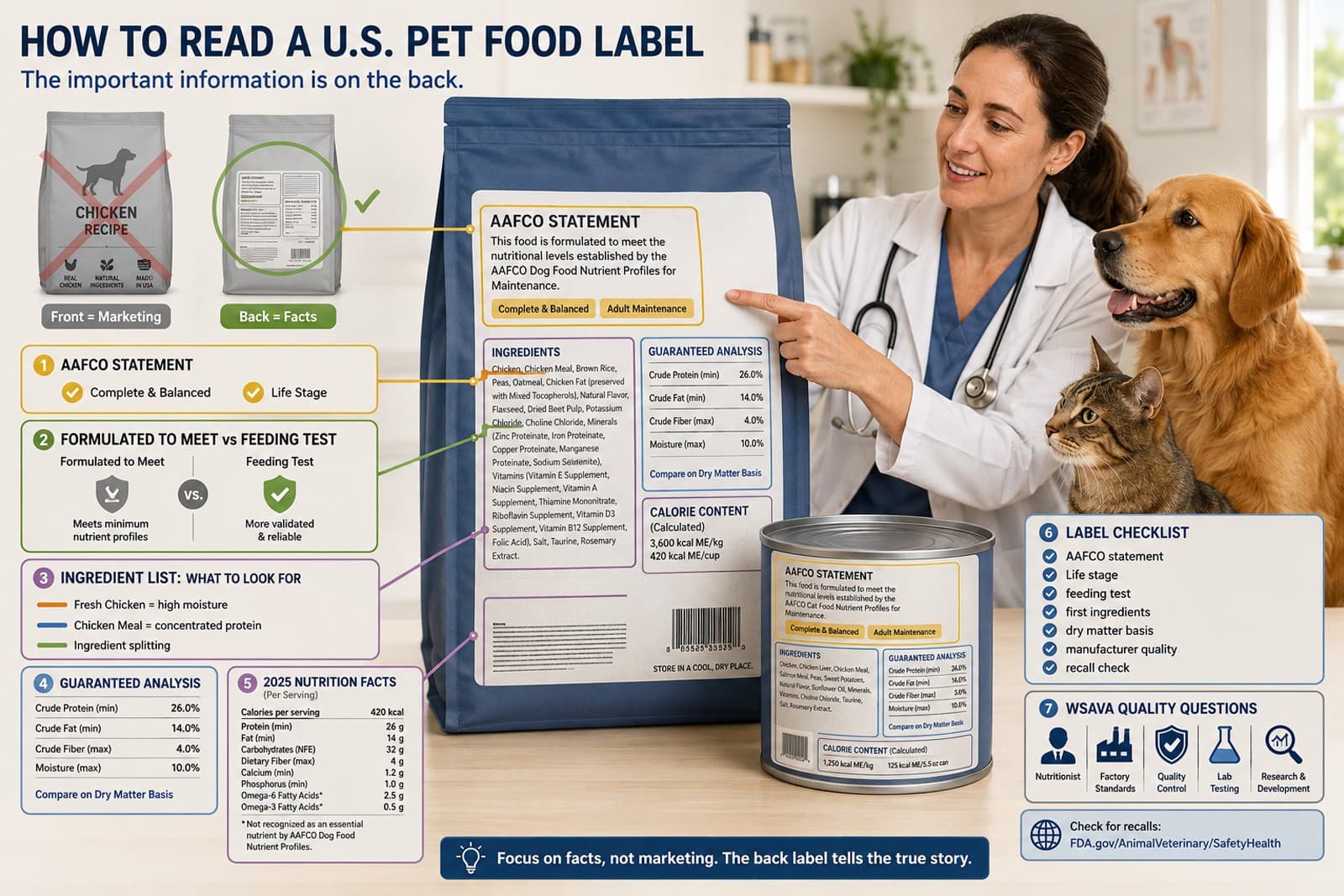
Pet food labels are dense, regulated documents that contain almost everything you need to know about a product — if you understand the code. Here is how to decode the AAFCO statement, ingredient list, guaranteed analysis, and the new 2025 Nutrition Facts panel.
2026-05-08