PET TRAINING · 5 MIN READ
Puppy Potty Training: A Realistic Week-by-Week Guide
Most puppies can be reliably housetrained by 4-6 months with a consistent routine, the right schedule, and one critical insight: puppies physically cannot control their bladder until about 16 weeks. Here is the realistic plan.
Advertisement
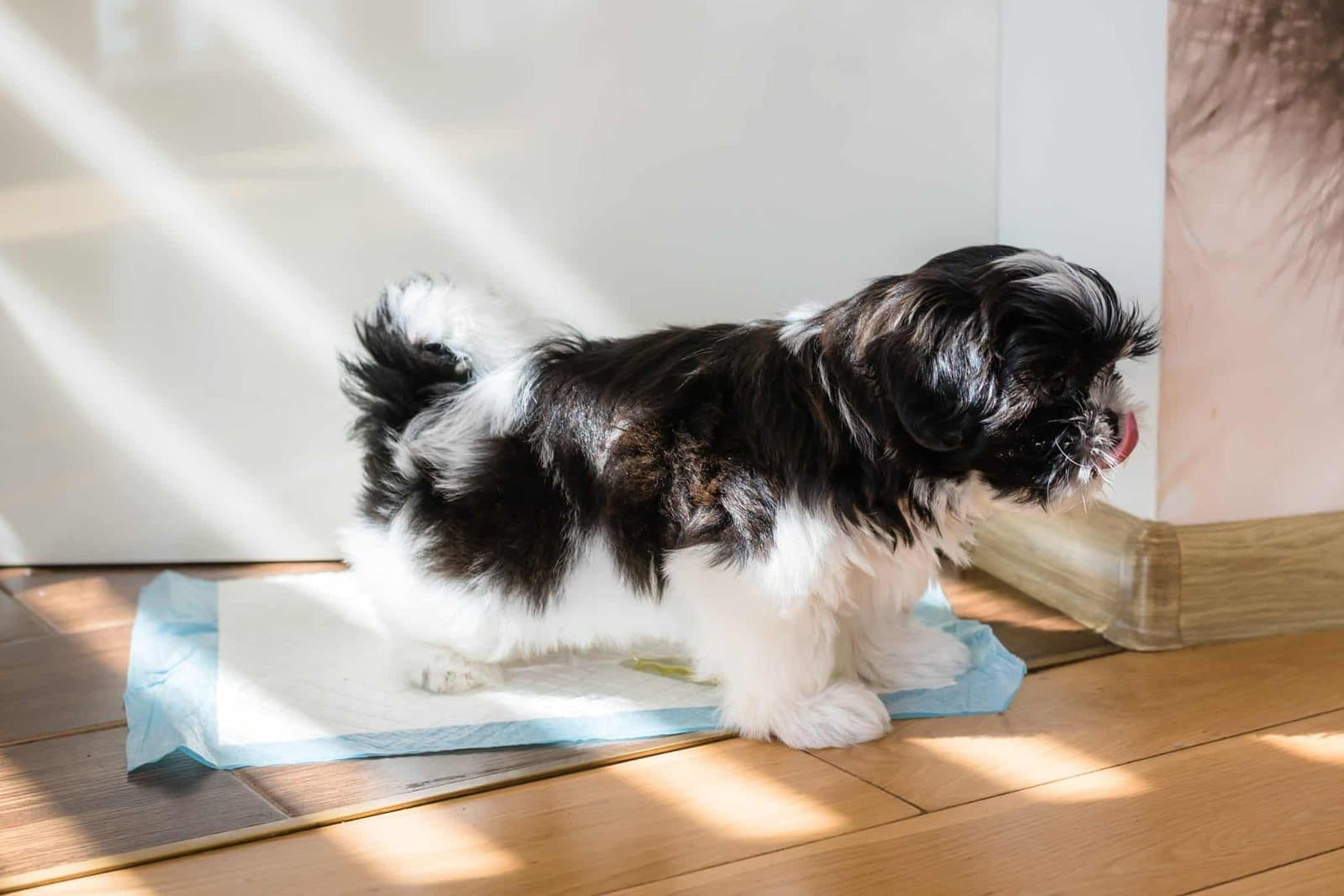
Set Realistic Expectations First
Two facts make potty training easier than most owners expect — and two make it harder.
The encouraging facts: dogs naturally avoid soiling where they sleep and eat, and a consistent routine plus crate training accelerates the process. According to the American Kennel Club, most puppies trained from 8 weeks become reliably housetrained by 4-6 months.
The hard facts: puppies physically cannot fully control their bladder until about 16 weeks of age, and accidents during this period are not training failures — they are biology. The owner who treats them as failures and punishes the puppy slows training and damages the relationship.
The Age-Plus-One Holding Rule
A common working rule: a puppy can hold their bladder roughly their age in months plus one hour, up to about 8 hours maximum.
| Age | Maximum hold time | Daytime potty breaks needed |
|---|---|---|
| 8 weeks | 2-3 hours | Every 1-2 hours when awake |
| 12 weeks | 3-4 hours | Every 2 hours when awake |
| 16 weeks | 4-5 hours | Every 3-4 hours |
| 6 months | 5-6 hours | 4-5 times daily |
| 1 year+ | 6-8 hours | 3-4 times daily |
The Setup You Need
- A correctly sized crate. Big enough to stand and turn around in, not big enough to use one corner as a bathroom.
- A leash for outdoor potty trips. Even in your own yard, use a leash so the puppy stays focused.
- An enzymatic cleaner (Nature's Miracle, Rocco & Roxie, Anti-Icky-Poo). Regular cleaners do not break down the urinary scent markers that signal this is the bathroom. Never use ammonia-based cleaners — ammonia smells like urine to dogs and reinforces the spot as a target.
- High-value treats for outdoor success — small, soft, and immediate.
- A potty schedule taped to the fridge for the first month.
Week 1: The Foundation
The first week is the most intense. Plan to be home, set timers, and treat every successful outdoor pee or poop like the win it is.
The fixed schedule
Take the puppy out:
- Immediately after waking up (morning and after every nap).
- Within 10 minutes of every meal.
- Within 10 minutes of every play session.
- Every 1-2 hours during the day.
- Right before bed.
- One or two times overnight (set an alarm) for puppies under 12 weeks.
The outdoor protocol
- Carry small puppies if possible to avoid pees on the way to the door.
- Take them on leash to the same spot every time. Scent at the spot reinforces the habit.
- Use a consistent cue word (go potty, do your business) as they begin to go.
- The instant they finish, mark with yes! and reward with a high-value treat. Praise generously.
- If they do not go within 10 minutes, take them back inside, crate or supervise closely for 10-15 minutes, then try again.
What to do about accidents
If you catch the puppy mid-accident, calmly interrupt with a sound (ah-ah!) and immediately take them outside. Reward if they finish outside. Do not yell, rub their nose in it, or punish — these cause fear and slow learning.
If you find an accident after the fact, simply clean it with enzymatic cleaner. The puppy has no memory connection between the puddle and your reaction; punishing later only teaches them to fear you.
Weeks 2-4: Building the Pattern
- Continue the fixed schedule but spread potty breaks slightly further apart as the puppy demonstrates control.
- Move from carrying the puppy out to letting them walk to the door.
- Begin to teach a tell-me-you-need-to-go signal — a bell on the door, a sit by the door, scratching at the door. When you see any pre-potty behavior (sniffing, circling, whining), respond immediately.
- Continue rewarding every outdoor success.
Expect 1-2 accidents per day during this period. Decreasing accident frequency is the marker of progress.
Months 2-4 (Puppy Age 4-6 Months): Refinement
- Most puppies show meaningful bladder control around 4 months.
- Reduce reward frequency: from every success to occasional jackpot rewards.
- Begin to allow more freedom in the house, room by room — but always supervised.
- Continue using the crate when you cannot supervise.
By 6 months, most consistently trained puppies are reliable in the house most of the time. Stress, illness, or schedule changes can still cause regressions — these usually resolve quickly with a return to the basic schedule.
Why Puppy Pads Are Mostly a Mistake
Puppy pads or paper training have a niche use case: apartment dwellers on high floors, owners with mobility limitations, or extreme cold-weather climates where outdoor potty is genuinely impractical. For most owners, pads create a confusing dual signal — the puppy learns that peeing inside is sometimes okay, which delays full outdoor training and increases accidents on rugs and floors that look pad-like.
If you must use pads, plan to fade them out: move them progressively closer to the door, then outside the door, then to the actual outdoor spot.
Common Setbacks (and What They Mean)
- Sudden regression in a previously housetrained puppy. Often a urinary tract infection, less often a sign of stress (move, new pet, schedule change). Vet check first.
- Pees in the crate. The crate is too big, the puppy was held too long, the puppy was crated when sick, or there is an underlying medical issue.
- Pees the moment they come back inside. Often the trip outside was too brief or too distracting; try a longer outdoor session next time.
- Submissive or excitement urination. Common with greetings. Keep greetings calm and low-key; do not bend over the puppy or make eye contact during arrivals.
- Marking by an adult dog. Different from accidents — small amounts on vertical surfaces. Spaying/neutering reduces marking; consistent supervision and management address it.
Feeding and Water Strategy
What goes in predicts what comes out, and timing matters as much as quantity. A few rules that simplify potty training:
- Feed on a consistent schedule — typically three meals per day for puppies under 6 months, two meals after that. Free-feeding (food available all day) makes it impossible to predict when your puppy will need to go.
- Take water away 1-2 hours before bed for puppies under 12 weeks. This reduces overnight accidents without dehydrating them; daytime water should always be available.
- Pay attention to what they eat. Sudden food changes cause loose stool and more accidents. Transition foods slowly over 7-10 days.
- Note the typical timing. Most puppies need to potty within 5-15 minutes after eating. Use this window — meal, short play, then outside.
The Cleaning Truth
The single most important investment in potty training is a high-quality enzymatic cleaner, used liberally on every accident. Dogs return to spots that smell like a bathroom; if you do not eliminate the urinary markers chemically, you are reinforcing the spot as a target every time the puppy enters the room.
The Bottom Line
Potty training is mostly logistics — a schedule, a crate, a cleaner, and high-value rewards for outdoor success. The biology of puppy bladder control means accidents will happen until 16 weeks no matter how perfect you are; treat them as data, not failures. With consistent execution, most puppies are reliably housetrained by 4-6 months and fully reliable by their first birthday.
For severe behavioral issues, consult a certified dog trainer or veterinary behaviorist.
RELATED READING
More from Pet Training
Pet Behavior
Common Pet Behavior Problems and How to Address Them
Most pet behavior problems are normal animal behaviors expressed at problematic intensity. Here are the 10 most common issues U.S. owners face, the framework for diagnosing what is actually driving each, and the right approach for fixing them.
2026-04-12
Pet Health
The Complete Pet Vaccine Schedule for Dogs and Cats (2026 Update)
From puppy and kitten boosters to adult and senior schedules, here is the up-to-date U.S. vaccine guide — including the 2024 update that made leptospirosis a core canine vaccine.
2026-05-07
Pet Training
The Puppy Socialization Window: Why 3-16 Weeks Matters Most
The single most important window in a dog's behavioral development closes at 16 weeks. Here is what to do during it, why it matters more than any obedience class later, and the AVSAB-approved approach to socializing safely before vaccines are complete.
2026-05-08