PET TRAINING · 6 MIN READ
How to Crate Train Your Puppy (or Adult Dog)
Crate training, done right, gives your dog a safe den and gives you a critical tool for housetraining, travel, and recovery. Done wrong, it creates anxiety. Here is the humane, week-by-week protocol the AKC, ASPCA, and Humane Society all endorse.
Advertisement
Why Crates Work
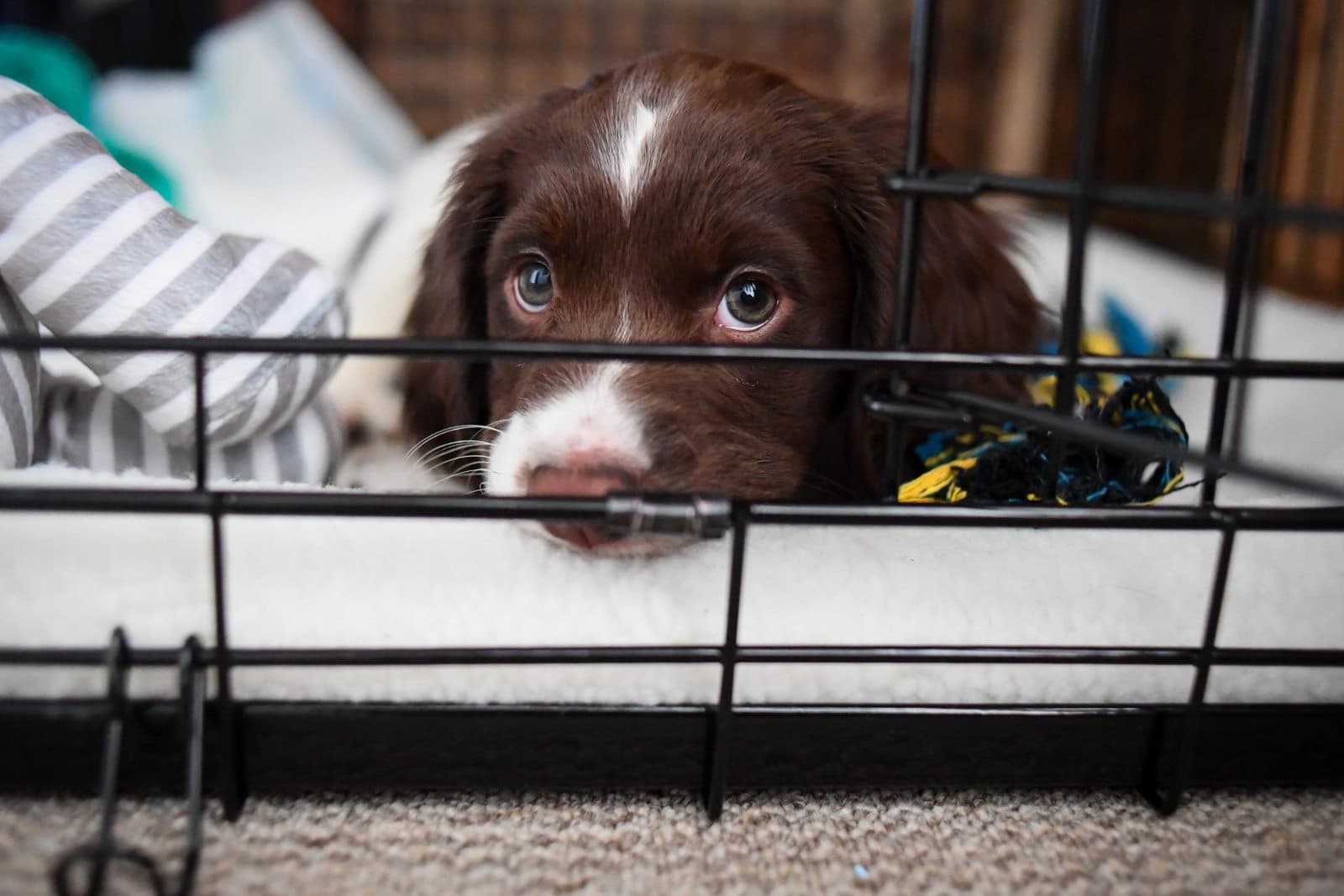
Dogs are denning animals by evolution. Wolves and other wild canids choose small, enclosed spaces to sleep, hide pups, and retreat from threats. A properly introduced crate taps into this instinct and gives your dog a place that feels uniquely theirs — somewhere they can decompress, sleep deeply, and feel safe.
From a training standpoint, the crate is one of the most useful tools you have. The American Kennel Club, ASPCA, Humane Society, and virtually every veterinary behaviorist recommend it because it accelerates housetraining (dogs naturally avoid soiling where they sleep), provides safe transport, gives an injured dog a place to recover, and prevents destructive chewing during the high-mistake adolescent months.
Why Crates Can Backfire
Crates fail when they are used as punishment, used too long, or pushed on a dog before they are conditioned to enjoy them. A dog who associates the crate with isolation, punishment, or trapped panic will fight it for years. Done right, a crate becomes a place your dog walks into voluntarily; done wrong, it becomes a battleground.
This guide walks through the slow, humane introduction that prevents the second outcome.
Choose the Right Crate
Size
The crate should be tall enough for your dog to stand without ducking, long enough to lie stretched out, and wide enough to turn around. Not larger. A crate too big lets the dog use one corner as a bathroom — which defeats one of the main benefits.
For puppies who will grow significantly, buy the adult size and use a divider to create a smaller space, expanding it as they grow.
Type
- Wire crates: the most common, foldable, with good ventilation and visibility. Fine for most dogs.
- Plastic crates: more den-like, airline approved. Better for anxious or noise-sensitive dogs.
- Soft-sided crates: portable, for dogs already crate-trained — not for any dog who chews.
- Furniture-style crates: wood enclosures that double as end tables. Good for established crate users; harder to clean for puppies.
Make the Crate Inviting
- Place the crate in a quiet but social spot — usually a living room corner during the day, your bedroom at night.
- Drape a sheet or blanket over part of the top to make it more den-like.
- Put soft, washable bedding inside.
- Leave the door open at all times during the introduction phase.
- Drop a few high-value treats inside throughout the day so the dog discovers them on their own.
The 7-Day Introduction Protocol
Days 1-3: Make It Magic
Do not close the door yet. Just make the crate the most rewarding place in the house.
- Drop treats inside throughout the day, every day.
- Feed all meals just outside the crate at first, then inside the crate (with the door open).
- Give a long-lasting chew (a stuffed Kong, a yak chew, a frozen lick mat) only when the dog enters voluntarily.
- Praise calmly and warmly when they go in on their own.
By day 3, most dogs will go into the crate when they hear food being prepared.
Days 4-5: Closing the Door
- Once the dog is fully eating meals inside, close the door for the duration of the meal only. Open it the moment they finish.
- Practice short closures (1-5 minutes) outside of mealtimes, with you sitting nearby. Drop treats through the bars.
- Open the door before any sign of distress — proactively, not in response to whining.
Days 6-7: Building Duration
- Extend closures to 10-30 minutes while you remain in the room.
- Then leave the room for very short periods (1-5 minutes) and return calmly.
- Reward calm behavior, not whining.
Week 2: Real Crating
- Begin to leave the dog crated for short outings (15-30 minutes), gradually increasing to a few hours.
- Always exercise the dog before crating. A tired dog crates more peacefully.
- Provide a safe long-lasting chew or stuffed Kong every time.
The Age-Plus-One Rule
The Humane Society and most behaviorists use a working maximum: a puppy can typically hold their bladder for their age in months plus one hour. A 3-month-old puppy can hold for about 4 hours; a 4-month-old, about 5 hours.
Puppies under 6 months of age should not be crated for more than 3-4 hours during the day, and never for more than 6-8 hours overnight. Adult dogs can be crated longer (4-6 hours daytime is reasonable for most), but no dog should spend 8-10 hours per day crated as a routine — that is a workday, every day, in a small box.
Nighttime Crating
The first few nights with a new puppy are usually the hardest. To make them easier:
- Place the crate in your bedroom for the first few nights so the puppy feels close.
- Provide soft, warm bedding and a chew toy.
- Take the puppy out for a final potty break right before bed.
- Set an alarm for one or two midnight potty breaks during the first 2-3 weeks (puppies under 12 weeks usually cannot hold overnight).
- Take them outside on leash, do not play, return them to the crate immediately after they go.
Puppies who whine at night are often communicating a real need (to potty, to be near you for the first few nights). After basic needs are met, brief whining usually passes within 5-10 minutes; persistent crying suggests the introduction was rushed.
Crate Training and Separation Anxiety
This deserves a clear distinction. The AKC, ASPCA, and every veterinary behaviorist agree: the crate is not a treatment for separation anxiety.
A dog with true separation anxiety crated alone often panics — they may injure themselves trying to escape, fracture teeth on the bars, or develop a deep aversion to the crate that persists for years. If your dog shows extreme distress when alone (destruction, vocalization, self-injury, urination/defecation despite housetraining), do not solve it with a crate. Work with a positive-reinforcement trainer or veterinary behaviorist on a counterconditioning and desensitization plan.
That said: a crate can be a calming retreat for some anxious dogs once introduced gradually and never associated with isolation. The difference is the order of operations — you build the positive association before testing alone-time, never the other way around.
When NOT to Crate
- As punishment. Sending a dog to the crate when they misbehave poisons the association.
- For longer than the age-plus-one rule.
- If the dog panics, self-injures, or eliminates inside despite a clean introduction. These signal a problem the crate cannot fix.
- For dogs with severe separation anxiety who have not been worked with by a behaviorist.
- For very small puppies during the day longer than they can hold.
Common Mistakes
- Skipping the introduction and going straight to closed-door crating.
- Letting the puppy out when they whine. This teaches them whining works. Wait for a brief quiet pause to open the door.
- Using the crate as a daytime daycare alternative for full workdays.
- Ignoring real distress as if it were just complaining. There is a difference.
Crate Training an Adult or Rescue Dog
Adult dogs absolutely can be crate trained — the protocol is the same, just sometimes slower. Many rescue dogs have negative crate associations from previous experiences, so you may need to introduce the crate as a completely open piece of furniture for several weeks before any door is closed. Take it as slow as the dog needs.
The Bottom Line
A well-introduced crate is a gift you give your dog: their own quiet space they can choose to enter for the rest of their life. The protocol takes one focused week of patient introduction, plus several weeks of slow duration-building. Skip the introduction and you will fight the crate for years. Do it right and your dog will walk in voluntarily, settle quickly, and find it the calmest place in your home.
For severe behavioral issues, consult a certified dog trainer or veterinary behaviorist.
RELATED READING
More from Pet Training

Pet Behavior
Common Pet Behavior Problems and How to Address Them
Most pet behavior problems are normal animal behaviors expressed at problematic intensity. Here are the 10 most common issues U.S. owners face, the framework for diagnosing what is actually driving each, and the right approach for fixing them.
2026-04-12

Pet Health
The Complete Pet Vaccine Schedule for Dogs and Cats (2026 Update)
From puppy and kitten boosters to adult and senior schedules, here is the up-to-date U.S. vaccine guide — including the 2024 update that made leptospirosis a core canine vaccine.
2026-05-07

Pet Training
The Puppy Socialization Window: Why 3-16 Weeks Matters Most
The single most important window in a dog's behavioral development closes at 16 weeks. Here is what to do during it, why it matters more than any obedience class later, and the AVSAB-approved approach to socializing safely before vaccines are complete.
2026-05-08