PET FEEDING · 5 MIN READ
Senior Pet Feeding: What Changes After Age 7
There is no AAFCO definition for senior pet food, which means most senior labels are marketing rather than regulation. Here is what actually changes nutritionally as pets age — and how to know when a real diet change makes sense.
Advertisement
The Senior Label Is Marketing, Not Regulation
One important fact most owners do not know: AAFCO has no official senior life stage. The recognized categories are growth/reproduction, adult maintenance, and all life stages. Foods marketed as senior are formulated to either adult maintenance or all-life-stages standards — the senior label is a marketing distinction, not a regulatory one.
This means two things:
- Senior dog and cat foods vary widely in actual composition. A 2025 analysis published in Frontiers in Veterinary Science found senior dog food protein content ranges from 18-23% (similar to adult formulations at 18-30%).
- You cannot assume a senior label means a meaningfully different formulation. Read the actual nutrient profile.
That said, real nutritional needs do change as pets age. Here is what actually matters.
What Changes Physiologically
Muscle mass
Dogs and cats both lose muscle mass with age — sometimes called sarcopenia of aging. Without intervention, dogs aged 7+ can lose 15-25% of muscle mass over their senior years.
Metabolic rate
Resting metabolism decreases. Combined with reduced activity, this means most senior pets need 10-20% fewer calories than they did as active adults.
Kidney function
Kidney function declines gradually with age. Severe decline (chronic kidney disease) is a clinical condition; mild decline is normal aging.
Digestive efficiency
Some senior pets digest protein and fat slightly less efficiently than adults — meaning they may need higher-quality, more bioavailable nutrients to absorb the same amount.
Joint health
Arthritis is nearly universal in senior pets, especially over age 8. Joint-supportive nutrients can help.
The Protein Myth (Senior Dogs Need More, Not Less)
For decades, the conventional wisdom was that senior dogs needed less protein to protect their kidneys. This advice is now widely considered outdated and incorrect.
Multiple studies and the position of contemporary veterinary nutritionists is that healthy senior dogs need more protein than active adults — typically 25-30% on a dry matter basis — not less. The reason: protein is required to slow muscle loss, support immune function, and maintain organ tissue.
The old myth originated from older studies using low-quality protein sources that were hard for aging kidneys to filter. With modern, high-quality animal proteins, this is no longer a concern for healthy seniors. The exception: dogs with diagnosed advanced kidney disease, where protein is sometimes restricted under veterinary guidance.
What About Senior Cats?
Senior cats face similar issues with muscle loss, but with one significant difference: chronic kidney disease (CKD) is the most common age-related illness in cats. Over 80% of cats show some evidence of CKD by age 15.
For cats with diagnosed CKD, prescription kidney diets (lower phosphorus, controlled high-quality protein, supplemental omega-3 fatty acids) are part of the standard treatment and meaningfully extend life. For healthy senior cats with no diagnosed kidney issues, standard high-quality adult cat food is appropriate; the prescription diet should follow a diagnosis, not precede one.
What to Actually Feed
For most healthy senior pets:
- A high-quality adult or all-life-stages food with named animal proteins as the first 1-3 ingredients.
- Higher protein percentage rather than lower (for dogs, 25-30% on dry matter basis).
- Adjusted portion size to match reduced calorie needs.
- Wet food added to the diet for hydration support, especially for senior cats.
- Routine bloodwork every 6-12 months to detect early kidney, thyroid, or metabolic changes.
Switch to a therapeutic diet only if a diagnosis warrants it.
Helpful Additions
Omega-3 fatty acids (fish oil)
Strong evidence for joint support, kidney support, and inflammation reduction. EPA and DHA from cold-water fish oils are the active components. Typical dose: 20-55 mg combined EPA+DHA per kg body weight per day. Discuss dosage with your vet.
Glucosamine and chondroitin
Modest evidence for arthritis support. Often included in senior-formulated foods, also available as separate supplements.
L-carnitine
Some evidence for muscle preservation in senior dogs. Often included in senior dog food formulations.
Antioxidants
Vitamin E, vitamin C, and various polyphenols may support cognitive function in aging dogs. The evidence is moderate; foods labeled for cognitive support typically include these.
What Does Not Help
- Restricting protein in healthy seniors. Outdated advice; no kidney protection in healthy pets, and accelerates muscle loss.
- Adding excessive supplements. Most complete and balanced foods already contain appropriate vitamins and minerals; oversupplementation can cause harm.
- Switching to senior food without verifying its composition. Marketing labels are not regulated.
Adjusting for Specific Conditions
| Condition | Dietary consideration |
|---|---|
| Chronic kidney disease | Prescription kidney diet (lower phosphorus, controlled protein quality) |
| Hyperthyroidism (cats) | Prescription Hill's y/d for medical management option |
| Diabetes | Prescription diabetic diet (low-carb for cats; high-fiber for dogs) |
| Heart disease | Prescription cardiac diet (sodium restricted) |
| Arthritis | Joint-supportive diet + weight management |
| Cognitive dysfunction | Antioxidant- and DHA-rich diet |
All therapeutic diets require a veterinary prescription. They are not interchangeable with retail senior foods.
Hydration in Senior Pets
Senior cats are particularly prone to subclinical dehydration. Strategies to increase water intake:
- Add wet food (or transition fully to wet for at-risk cats).
- Provide multiple water bowls in different rooms.
- Try a water fountain (many cats prefer moving water).
- Add water to dry food (let it sit 5-10 minutes to soften).
For senior dogs, ensure water is always available and take older dogs out for more frequent potty breaks since hydration support requires bladder access.
Body Condition Monitoring
Senior pets are at the highest risk for unintended weight changes. Both unintended weight loss (often early sign of cancer, kidney disease, or hyperthyroidism) and unintended weight gain (often hypothyroidism, Cushing's, or simple metabolic slowdown) deserve attention. Weigh your senior pet monthly. Body condition score (a 1-9 scale assessed visually and by feel) is more sensitive than weight alone — your vet can teach you to score it at home.
When to Consider a Real Diet Change
The triggers that should prompt a meaningful change to your senior pet's diet are usually clinical, not calendar-based:
- Bloodwork changes showing early kidney, liver, or thyroid issues. Therapeutic diets started at this stage often add years.
- Diagnosed disease requiring a prescription diet (CKD, diabetes, heart disease, hepatic disease).
- Body condition drift. If your pet is gaining or losing weight unintentionally, the calorie target needs adjustment first; a different food may follow.
- New food sensitivity. Some pets develop sensitivities later in life that warrant a limited-ingredient or hydrolyzed-protein diet.
- Dental disease that limits eating. Senior pets with periodontal pain may need to switch from kibble to softened or wet food.
Without one of these triggers, most healthy senior pets do well on the same quality adult food they have eaten for years, with adjusted portions and perhaps a fish-oil supplement added for joint and cognitive support.
The Bottom Line
Senior pet feeding is mostly a story of overlooked basics rather than dramatic intervention: portion adjustment as activity decreases, more not less protein for healthy seniors, hydration support especially for cats, and careful matching of the diet to any specific medical condition that emerges with age. The senior label on the bag is largely unreliable; the conversation with your vet about your specific pet's bloodwork and body condition is what actually matters for nutritional decisions during the senior years.
This article is for informational purposes and is not veterinary nutrition advice. For specific dietary recommendations for your pet, consult your veterinarian or a board-certified veterinary nutritionist (DACVN).
RELATED READING
More from Pet Feeding

Pet Adoption
Why Senior Pets Make Amazing Companions (And Why They're Overlooked)
Older dogs and cats sit longer in shelters and are far less likely to be adopted — but the people who choose them often describe the relationship as the most rewarding pet experience of their lives. Here is why, and what you should know going in.
2026-04-29

Pet Behavior
Cognitive Dysfunction in Senior Pets (Pet Dementia): Signs and Care
Roughly 28% of dogs aged 11-12 and 68% of dogs aged 15-16 show signs of cognitive dysfunction syndrome — the canine equivalent of dementia. Cats develop a similar condition. Here is the DISHA evaluation, current treatment options, and what owners can do at home.
2026-04-25
Pet Feeding
How to Read a Pet Food Label
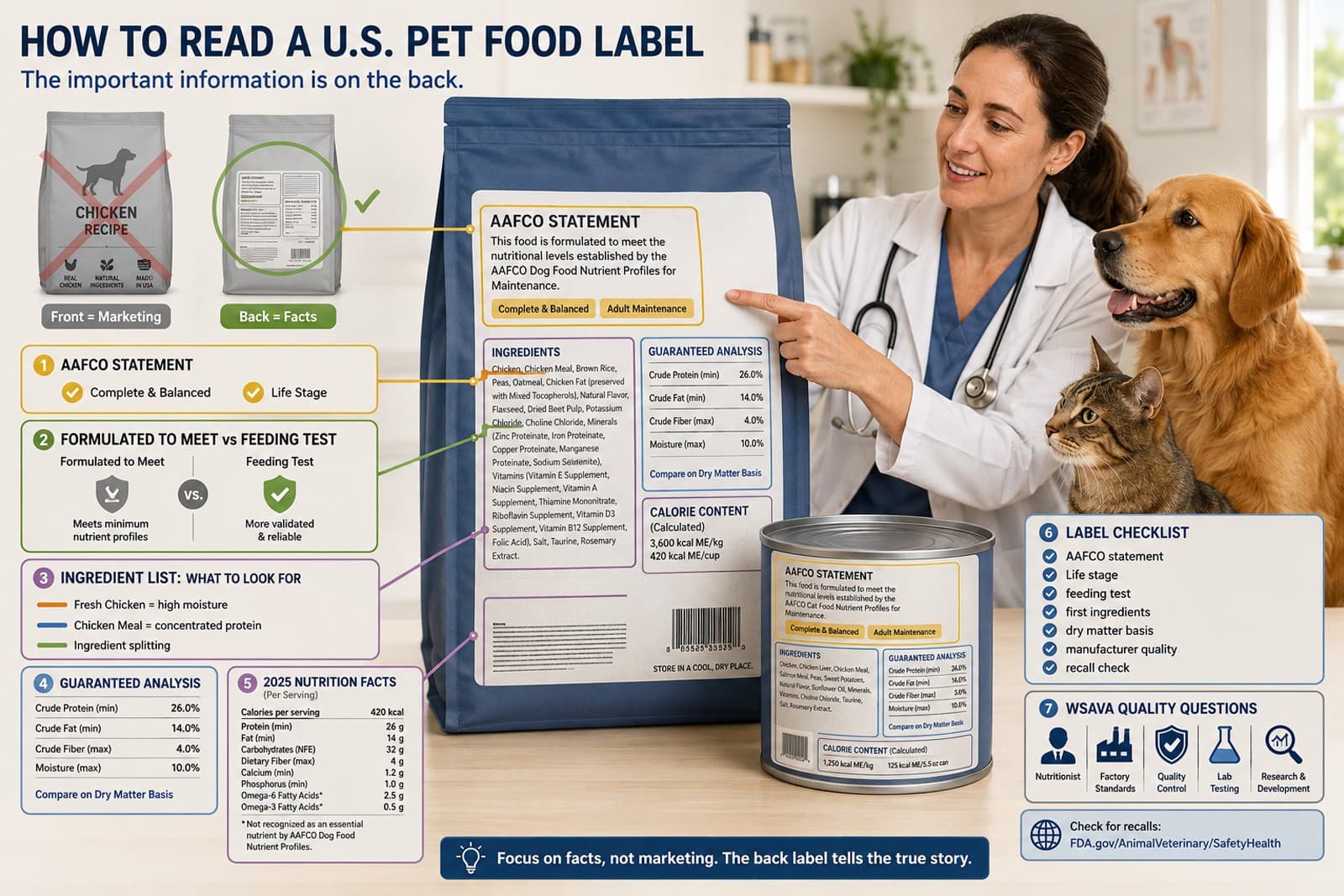
Pet food labels are dense, regulated documents that contain almost everything you need to know about a product — if you understand the code. Here is how to decode the AAFCO statement, ingredient list, guaranteed analysis, and the new 2025 Nutrition Facts panel.
2026-05-08