PET BREED · 6 MIN READ
Doodles, Mixes, and Designer Breeds: What to Actually Know
Doodles dominate U.S. designer dog marketing — but the science behind hypoallergenic claims, hybrid vigor, and breed predictability is more nuanced than the marketing suggests. Here is what to actually know before committing.
Advertisement
The Designer Dog Boom
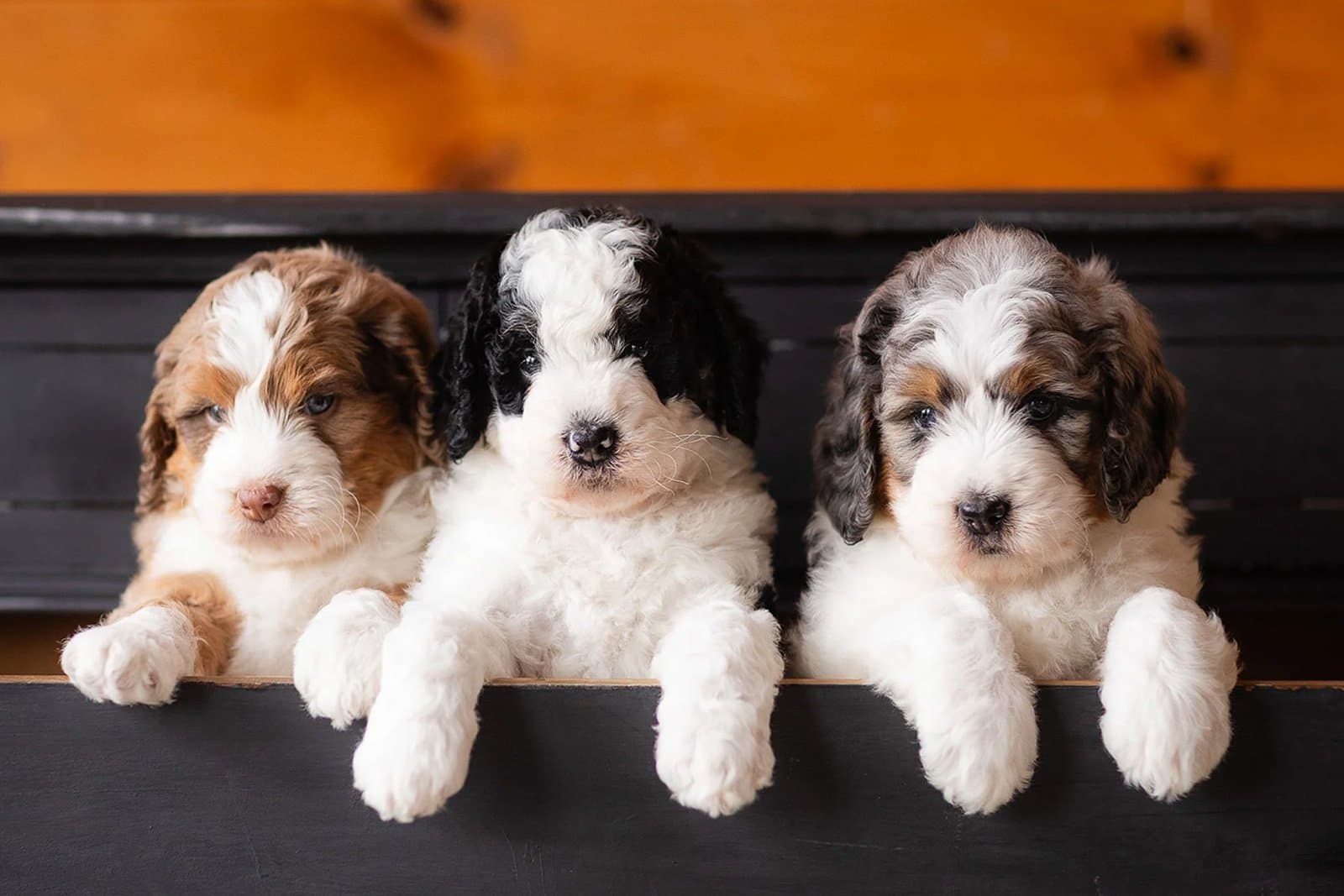
Labradoodles, Goldendoodles, Bernedoodles, Cockapoos, Pomskies, Puggles, Aussiedoodles — the designer dog or designer mix market has exploded over the past 25 years. Designer dogs are intentional crosses between two purebred dogs, marketed under invented names. The most popular designer category by far is Doodles — Poodle crosses with retrievers, sheepdogs, terriers, and more.
The marketing pitch: get the best of both breeds — the friendly Lab personality with the low-shedding Poodle coat. The reality is more complicated. This guide covers what designer breeds actually are, what they are not, and how to make an informed decision if one appeals to you.
What Designer Breeds Are
Most designer breeds are first-generation crosses (called F1) — one purebred Parent A bred with one purebred Parent B. Genetics work like a coin flip with many coins: each puppy in the litter inherits a different mix of traits from each parent. Two F1 Goldendoodles can be dramatically different from each other.
Later generations:
- F1B — F1 Doodle bred back to a Poodle. More predictable Poodle traits.
- F2 — F1 bred to F1. Most variable generation.
- F2B, F3, multigenerational — increasing predictability over generations.
The best of both breeds claim works most consistently in F1B and beyond, where breeders have selected for specific traits across multiple generations.
What Designer Breeds Are Not
They are not breeds in any formal sense
The American Kennel Club, Federation Cynologique Internationale, and other major registries do not recognize Doodles or designer mixes. They are mixes — combinations of two breeds, sometimes carefully bred, often not.
They are not guaranteed hypoallergenic
F1 Doodles have unpredictable coats. About 50% inherit Poodle-type curly coats; the rest inherit either Retriever-type fur or intermediate hair coats that may shed substantially. Allergy compatibility cannot be guaranteed at the puppy stage. Reputable Doodle breeders explicitly state this; less reputable ones imply guarantees.
They are not always healthier (the hybrid vigor question)
Hybrid vigor (heterosis) is real for some traits, but designer breeders often cross dogs with overlapping breed-specific health risks. A Goldendoodle inherits Golden Retriever cancer risk and Poodle hip dysplasia risk simultaneously. Health testing of both parents is essential — many Doodle breeders skip this.
They are not consistent in temperament
An F1 cross can lean strongly toward either parent or land somewhere between. A specific Goldendoodle might be calm like a typical Golden, energetic like a typical Poodle, or anxious like neither.
The Real Costs
Designer breed pricing has risen sharply over the past decade. In 2026, typical prices:
- F1 Doodles from reputable breeders: $2,000-$4,500.
- F1B Doodles with health testing: $2,500-$5,000.
- Mini and Toy variants: often premium-priced at $3,500-$6,000+.
Beyond the puppy price, owners should plan for:
- Professional grooming every 6-8 weeks at $80-$150 per visit. Over 12-15 years, this adds $7,000-$15,000.
- Higher-than-average vet costs if breed-specific health issues emerge.
- Significant exercise commitment — most Doodles are higher-energy than people expect.
The Designer Breed Welfare Question
Several concerns have emerged about the designer breed market:
- Backyard and commercial breeding. The high prices of Doodles have attracted poorly regulated breeders, including puppy mills. Many Doodles sold come from operations with minimal health testing or socialization.
- Designer breed rescues. The mismatch between marketing promises and reality has led to many Doodles ending up in rescue. Designer breed rescues now exist specifically to handle this volume.
- Coat maintenance challenges. Many Doodle owners discover within months that their dog requires more grooming than they signed up for, leading to severe matting.
How to Choose a Doodle Breeder Responsibly
If you are committed to a Doodle, the framework matches the framework for any responsible breeder:
- Health testing on both parents. OFA hip and elbow scores, eye certifications, cardiac evaluations.
- Genetic testing for breed-specific conditions. PRA, EIC, von Willebrand's depending on the cross.
- Multi-generational breeding with proven coat consistency rather than first-time F1 attempts.
- Welcomes home visits and shows you both parents.
- Reasonable waitlists. Always-available puppies = production breeding.
- Written contracts with return clauses and health guarantees.
The Adoption Alternative
Doodle-specific rescues exist nationally and locally. Major examples include Doodle Rescue Collective, IDOG Rescue, and many regional groups. Adoption fees ($300-$500) are dramatically lower than breeder prices, and you skip the puppy gamble — adult rescue Doodles have established temperaments and known coat types.
Other Designer Breeds Worth Knowing
- Cockapoo (Cocker Spaniel × Poodle): friendly, low-shedding when curly-coated, smaller than Goldendoodles.
- Pomsky (Pomeranian × Husky): controversial — Husky size meets Pomeranian temperament can be a difficult mix.
- Puggle (Pug × Beagle): aimed at moderating Pug brachycephalic issues; results vary.
- Cavapoo / Cavoodle (Cavalier × Poodle): popular companion mix; combines Cavalier health concerns with Poodle traits.
- Aussiedoodle / Bordoodle (Australian Shepherd or Border Collie × Poodle): high-intelligence high-energy mixes that need more work than typical pet households.
Common Designer Breed Mistakes
- Buying based on marketing promises. Especially around hypoallergenic claims and predicted size.
- Choosing the cutest puppy without meeting parents.
- Underestimating grooming costs and time.
- Buying from social media or online sellers without vetting.
- Assuming hybrid vigor solves all health concerns.
The Doodle Rescue Crisis
One of the largest unintended consequences of the Doodle boom: the proliferation of Doodle-specific rescues. The mismatch between marketing promises and reality has produced thousands of surrendered Doodles over the past decade. Common reasons for surrender:
- Owners who bought based on hypoallergenic claims and turned out to be allergic anyway.
- Coats requiring more grooming than the family could afford or manage.
- Energy levels far higher than expected — many Doodles inherit Poodle drive plus retriever endurance.
- Health issues compounded across both parent breeds.
- Behavioral problems including separation anxiety, which Doodles experience at high rates.
Doodle Rescue Collective alone has placed thousands of dogs since 2007. Adopting from a Doodle rescue is often a better path than buying — adult rescue Doodles have known temperaments, established coats, and dramatically lower costs.
What to Ask Before Buying a Doodle
If you are committed to buying a Doodle puppy, the following questions separate responsible breeders from production operations:
- What health testing did you do on both parents? (Specific OFA scores and certifications, not just we tested them.)
- How many litters does each dam produce per year? (More than one is a red flag.)
- How many breeds are you producing? (Doodle production-style breeders often have 8-12 different mixes simultaneously.)
- Can I meet both parents and see the home where the puppies are raised?
- What socialization protocol do you use during the first 8 weeks?
- What happens if I cannot keep the dog in 5 years?
The Bottom Line
Designer breeds are not inherently better or worse than purebreds — they are different. They can be wonderful companion dogs when bred responsibly, and disappointing when bred for marketing rather than for traits. Go in with realistic expectations: unpredictable coats in F1 generations, real grooming costs, and the same health-testing standards you would apply to any breeder. Or skip the gamble entirely and adopt an adult Doodle from rescue, where temperament and coat type are already known.
The most honest framing of the entire designer breed market: it is neither the marketing miracle promised nor the puppy-mill scandal sometimes claimed. It is a category with real responsible breeders, real ethical concerns, real veterinary issues, and real wonderful dogs — and the responsibility to navigate it well falls on the buyer, not the marketer.
RELATED READING
More from Pet Breed
Pet Breed
Best Dogs for Seniors: How to Choose the Right Companion
The best dog for a senior isn't the cutest one — it's the one whose energy, size, and care needs fit the owner's daily life for the next decade. Here are the breeds veterinarians and shelter coordinators recommend most for older adopters, why an adult or senior dog often beats a puppy, and the honest questions to answer before you bring one home.
2026-06-24
Pet Breed
How to Choose the Right Pet Breed for Your Lifestyle
Of all the decisions in pet ownership, breed choice has the longest-running consequences. Here is the framework veterinary behaviorists, AKC counselors, and rescue placement coordinators use to match breeds to actual lives — and the most common mistakes that produce mismatches.
2026-05-09
Pet Breed
Brachycephalic Breeds: Why Flat-Faced Pets Need Special Care
The most popular dog breed in America has a name for its airway condition: BOAS. Here is what brachycephalic means, the predictable health concerns, the financial reality of owning these breeds, and what responsible care looks like.
2026-05-08